
Family Garden Design In St Albans: Play Space Now, Grown-Up Garden Later
Superior Garden Design St Albans
A family garden in St Albans has a short shelf life if it’s designed for one age. The toddler who needs a fenced patch of grass in 2026 wants a football goal by 2030 and a hammock and some privacy by 2036. Ten years is roughly how long a well-built garden takes to settle in, so the layout you pay for now should still make sense when the climbing frame goes to the tip. Most of the families who come to us live on one of three plot types: the long, thin gardens behind the Victorian and Edwardian terraces of Fleetville and the streets around Clarence Park, the wider 1930s and postwar semis of Marshalswick, and newer houses with compact, squared-off gardens. Each one puts the play space somewhere different. Underneath all of them is the same awkward ground, clay-with-flints over chalk, which decides how muddy the lawn gets in February and how bald it gets in August. This guide covers zoning, surfaces, safe planting, storage and rough costs, and how to plan a garden that changes as the children do.
Zoning a family garden in St Albans from the kitchen window
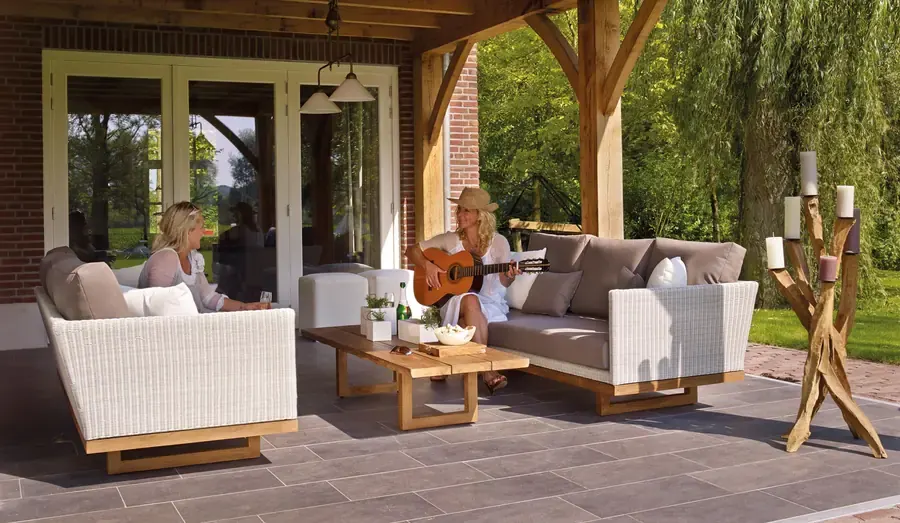
Before we draw a single path, we go and stand at the kitchen sink. Whoever is cooking needs to see the youngest children without leaning out of the door, and that one sightline fixes where the toddler zone goes: close to the house, in view, and on the side that gets afternoon sun rather than the shady strip by the fence.
Older children want the opposite. A seven-year-old with a ball wants as much distance from the windows as the plot allows, and a twelve-year-old wants a corner nobody can see into. So a family layout usually has three bands. Next to the house is a terrace big enough for a table and somewhere to sit while you watch. Beyond it is open ground for running, and at the far end something for the bigger children: a den, a trampoline, a hammock slung between two posts.
The terrace is the part people tend to undersize. It ends up holding scooters, a paddling pool and four adults on a Sunday, so we rarely go below about 4 metres deep. Our outdoor living design work starts from that same question of who sits where and what they need to see.
Where the play goes on a terrace, a 1930s semi or a new build
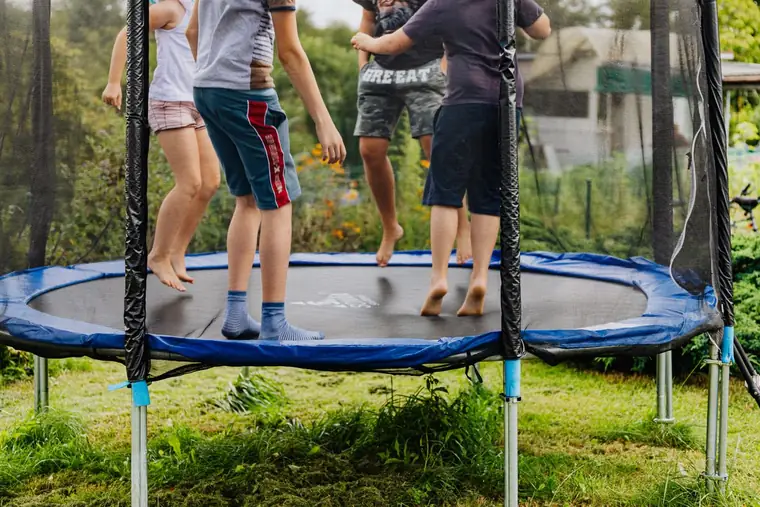
On a narrow Victorian plot, the width is the problem. A 5-metre-wide garden can’t take a trampoline beside a lawn, so the zones stack one behind another instead. We often put the play kit in the middle third, where it’s still visible from the house, and keep the far end for storage and a compost bay. Our post on designing a long, narrow St Albans garden walks through those sections in detail.
The 1930s semis are friendlier. Gardens are usually wider, and many have side access, which matters more than people expect: a side gate means bikes, muddy boots and a new trampoline can get in and out without going through the hall. The lawn can be a proper square, and the play area can sit to one side of it rather than in the middle of everything.
New-build gardens are the hardest to read. They often look tidy on handover but sit on a thin skin of topsoil over compacted clay and leftover rubble. Before a sunken trampoline or a sandpit goes in, dig a trial hole. On clay-with-flints, a trampoline pit with no drainage turns into a pond after the first wet week. On chalk it drains in an hour.
Grass, bark or rubber under the climbing frame
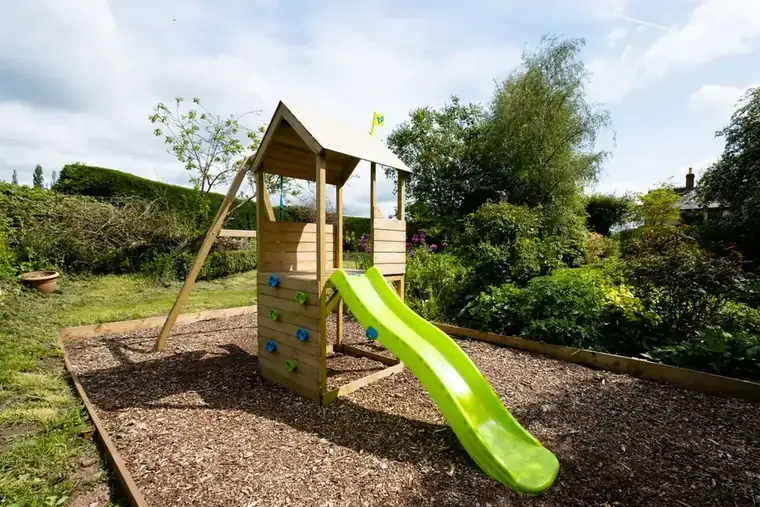
Grass is the cheapest play surface, and children like it best. It cushions a fall from a low slide well enough, it costs very little, and it repairs itself. What it can’t take is concentrated wear. The patch at the bottom of a slide or under a swing goes bare by June and turns to mud by November, especially on clay.
That’s why we usually give climbing frames and swings their own surface. Play-grade bark, laid deep (around 300mm) inside a timber edge, is the standard choice. It’s soft, it drains, and topping it up every couple of years is cheap. Rubber mulch does a similar job and doesn’t blow about, but it’s plastic and it gets hot. Poured rubber, the kind you see in public playgrounds, is very hard-wearing and costs far more. For a domestic garden it rarely makes sense, unless the play area sits right outside the back door and has to stay clean.
We’re cautious about artificial grass under play equipment for the reasons in our earlier piece on lawn, artificial grass or meadow: heat, friction burns and a cushioning layer that needs to be specified properly. If the main lawn is for football, sow or turf it with a hard-wearing ryegrass mix and move goals around every few weeks so no single goalmouth wears through.
Safe planting for a family garden: what the RHS list says

Most garden plants are perfectly safe, and a family garden doesn’t need to be stripped back to grass and lavender. But a handful of very common ones are worth keeping out of the toddler zone. The RHS keeps a list of potentially harmful garden plants, sorted into categories with A as the most toxic. Several plants that turn up in almost every Hertfordshire border are in Category B: foxglove, monkshood, laburnum and yew are all listed as toxic or harmful if eaten. Euphorbia and rue are listed for skin irritation, and rue sap reacts with sunlight to cause burns.
Yew deserves a mention here because St Albans has so much of it, clipped into hedges and topiary in older gardens across the city. We wouldn’t rip out a mature yew hedge, but we would keep a sandpit or a mud kitchen away from it, since the seeds and foliage are poisonous. Where we plant foxgloves and euphorbias, they go at the back of borders the older children use, not along the edge of a toddler’s lawn.
For the parts children handle, we choose plants that cope with being touched, sat on and occasionally trodden on. Lamb’s ears, which children love to stroke, and hardy geraniums both qualify. So do grasses such as Stipa tenuissima, and strawberries, peas and sunflowers they can grow themselves. The RHS’s own advice is to teach children not to eat anything that isn’t a food plant, which is easier when the edible plants are obvious and theirs.
Clay-with-flints, chalk and the state of the lawn
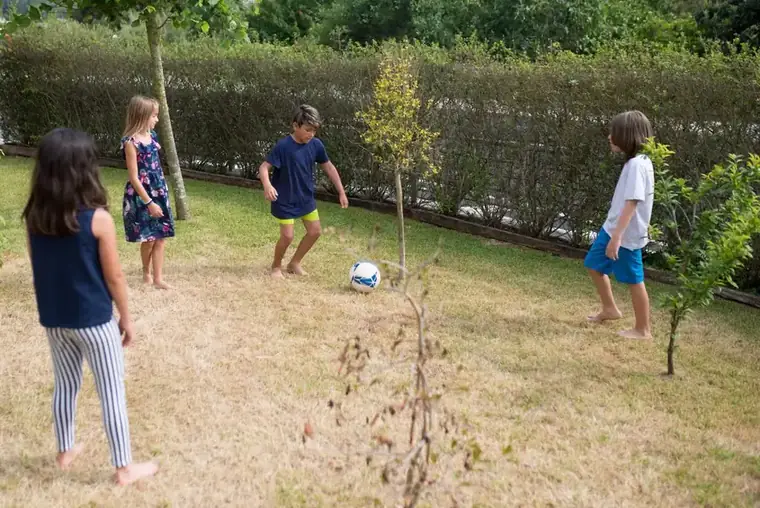
The local soil shapes a family garden more than most design choices do. On the higher ground the clay-with-flints cap holds water, so the lawn stays green longer in a dry summer but turns to a slippery mess under football boots from November to March. It also keeps throwing up flints. A child running barefoot finds them before you do, so a new play lawn on clay gets a proper dig, a rake over to pull out the worst stones, and a top layer of screened soil before the turf goes down.
On chalk, nearer the Ver, the problem flips. Drainage is excellent and the lawn is playable all winter, but it browns early, as anyone who watched their grass vanish during this summer’s hosepipe ban will know. A thin chalk soil also wears through quickly where children play, because the grass roots don’t go deep.
Which one you have also changes the planting list, and our guide to what grows in St Albans clay and chalk sorts plants by soil. Either way, plan for the muddy route between the back door and the lawn. Lay a path of paving or bound gravel along the line children actually run, not the line you’d like them to use. Your hall carpet will thank you.
Bikes, scooters and the shed question
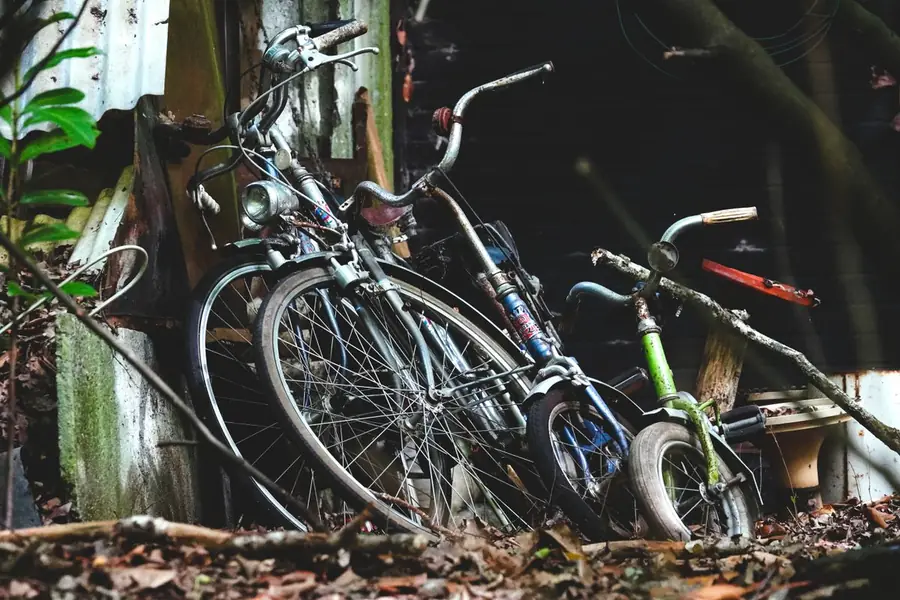
Storage is the job most family gardens leave too late. A family of four can easily own four bikes, two scooters, a balance bike, a paddling pool, a set of goals and a sack of sand. Without a home for all that, it ends up on the lawn.
On a terraced street without side access, bikes have to come through the house or live in the front garden, and front gardens come with a planning catch. Under the national permitted development rules on the Planning Portal’s outbuildings guidance, no outbuilding is allowed on land forward of the house’s principal elevation, so a bike store in the front garden can need planning permission. In the back garden, a shed within 2 metres of a boundary must stay under 2.5 metres high. If you’re in a conservation area, and the council’s list of St Albans conservation areas covers a good deal of the older city, anything at the side of the house needs permission too. Our post on garden landscaping and planning permission in Hertfordshire goes through the rest.
In practice, we design storage near the side gate if there is one, or in a slim bike store tucked against the back of the house where it’s quick to reach on the school run. Toys go somewhere children can put them away themselves: a low bench with a lift-up lid on the terrace works better than a shed at the far end that nobody walks to in the rain.
A family garden in St Albans that changes at 5, 10 and 15
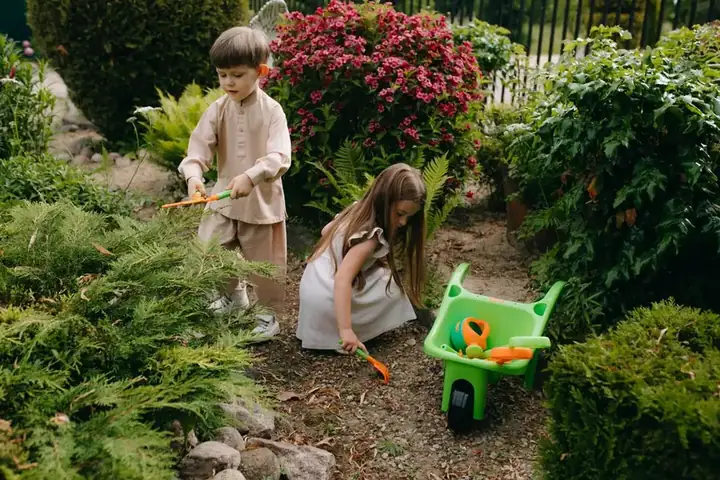
Build the permanent things once. Treat the play kit as temporary. Paths, the terrace, walls, drainage and trees are expensive to move, so they go where an adult garden would want them. The sandpit, the swing and the trampoline sit inside spaces that can be repurposed later.
A sandpit framed in sleepers is a good example. At three it’s a sandpit. At eight the sand comes out, soil goes in, and it becomes a raised bed for the child who wanted to grow pumpkins. By fifteen it might be a herb bed by the barbecue. The bark-chip play area under the climbing frame, edged in timber or steel, lifts out to leave a ready-made gravel seating area or a space for a small studio. The same logic applies to a pond. Even shallow water is a drowning risk for toddlers, so we tend to leave a level, well-drained spot for one and fill it with something else until the youngest child is old enough.
Planting can follow the same timeline. Shrubs that can take a football in their early years go in first, with more delicate perennials added once the ball games move to the park. Plenty of parents tell us they want the grown-up version to be easier to look after than the play years were, and the choices that make that happen are covered in our post on low-maintenance garden design in St Albans.
What a family garden costs in St Albans
These are rough 2026 ranges from gardens we see around St Albans. They assume reasonable access and no major level changes:
| Scope | Typical range |
|---|---|
| Play refresh: new lawn, bark play area, sandpit, simple storage | £6,000 to £15,000 |
| Family redesign of a semi garden: terrace, lawn, paths, play zone, planting | £25,000 to £55,000 |
| Full build on a larger plot with a garden room or studio for later | £60,000 and up |
| Bark play area in a timber edge, around 20m² | £1,500 to £3,000 |
| Bike store or shed with a proper base | £1,000 to £3,500 |
The biggest swings come from access and hard landscaping. A terrace where everything has to come through the house costs noticeably more than one with a side gate, and paving area moves the total far more than the choice of slide. The garden design cost guide explains how the fee and build budgets fit together, and our 2026 breakdown of garden redesign and build costs goes into more detail on materials and labour.
It’s also a good garden to phase. Get the drainage, terrace and lawn right in year one, leave the play kit simple, and add the studio or the planting upgrades once the trampoline has gone.
Common questions
How big does a family garden in St Albans need to be for a trampoline?
A typical 10ft trampoline needs about 3 metres across plus a clear margin of around 2 metres all round, so a strip at least 7 metres wide is comfortable. Narrow terrace gardens often suit a smaller trampoline or a sunken one, as long as the pit is drained properly on clay.
Which garden plants should I avoid with young children?
The RHS lists foxglove, monkshood, laburnum and yew among plants that are toxic or harmful if eaten, and euphorbia and rue as skin irritants. You don’t need to remove them all, but keep them away from toddler play areas and teach children not to eat anything that isn’t a food plant.
Do I need planning permission for a bike shed?
In a back garden, usually not, as long as it stays within permitted development limits, including a 2.5 metre height cap within 2 metres of a boundary. A store in front of the house, or at the side of a house in a conservation area, can need permission, so check with St Albans City and District Council first.
Is bark or grass better under a climbing frame?
Grass is fine under low equipment, but it wears bare under swings and slides. A deep layer of play-grade bark, around 300mm, inside a timber edge cushions falls better, drains well on clay and is cheap to top up.