
What To Plant In St Albans Soil: Clay Or Chalk?
Superior Garden Design St Albans
Every summer we get called to gardens where the lavender has died again. Third attempt, same spot, same slow yellowing collapse - and three streets away, someone’s lavender hedge is billowing over the pavement without ever being watered. Nobody involved is a bad gardener. They’re on different soils, in a city that happens to straddle two of them. Most of St Albans sits on a plateau of clay-with-flints: heavy, sticky, studded with stones, holding water for months. Cut through it - as the River Ver does - and you hit the chalk underneath: thin, pale, alkaline, dry by June. The distance between the two can be a few hundred metres, which is why planting advice from a neighbour, a book or a garden centre label so often fails here. Get the soil right first and plant choice becomes easy; ignore it and you’re renting your plants rather than owning them. Here’s how to tell which soil you garden on, and what does well in each.
First, find out which side of the line you’re on
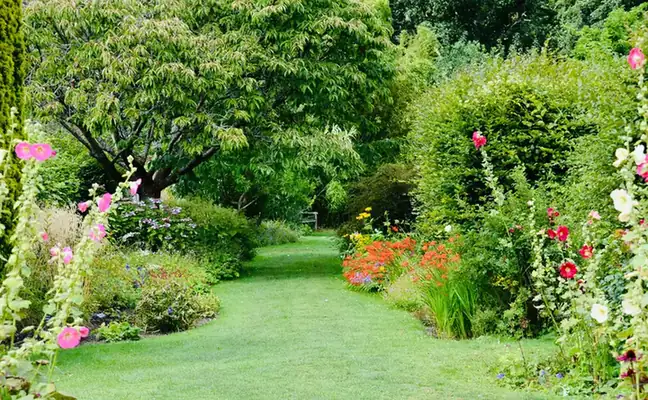
Broadly, height is your first clue. The higher ground - Marshalswick, Fleetville, Bernards Heath and out towards Sandridge - tends to carry the clay cap. Drop towards the Ver around St Michael’s, Sopwell and the valley side of the city and chalk comes closer to the surface, sometimes with only a thin skin of soil over it. Cranfield University’s free Soilscapes map will show you the mapped soil type for your postcode area, and it’s a solid starting point.
But maps generalise and gardens are specific, so confirm it with a spade. Dig a hole two spits deep in a couple of spots. Clay-with-flints announces itself: orange-brown, sticky enough to roll into a sausage when moist, and full of sharp flints that ring off the blade. Chalky soil is paler and crumblier, often with white fragments, and water poured into the hole vanishes rather than sitting. A £10 pH kit settles any argument - the clay here usually tests neutral to slightly acid, while anything on chalk reads firmly alkaline, often above pH 7.5. Twenty minutes of digging saves years of guesswork, and it’s the first thing done in any proper planting design survey.
Gardening on the clay cap: heavy soil, generous plants
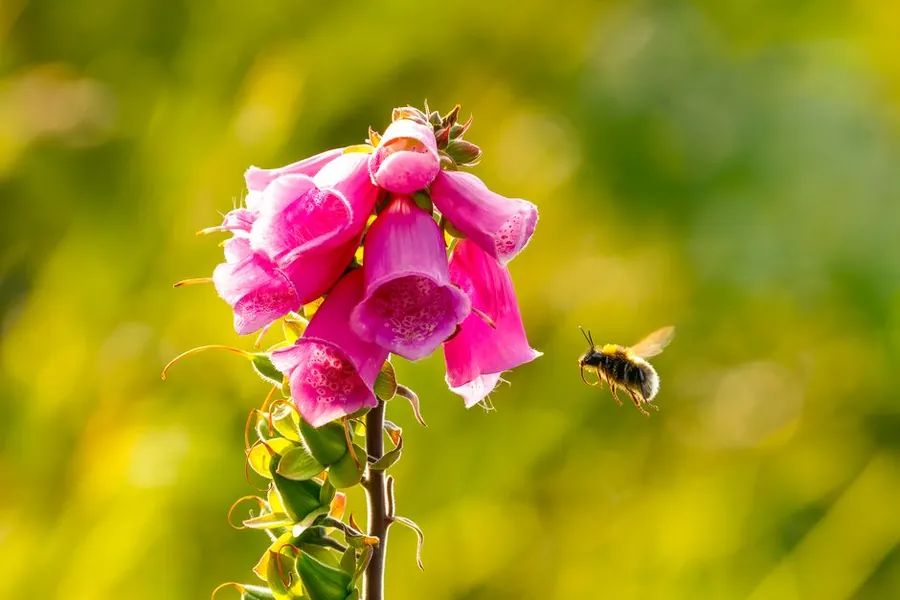
Clay gets cursed at, but it’s the richer inheritance. Those sticky particles hold nutrients and moisture the way chalk never can, and plants that get their roots established grow with real vigour. Roses are the famous beneficiaries - the old advice that they love clay holds up street after street here. Alongside them: hydrangeas, viburnums, dogwoods with their winter stems, hardy geraniums, foxgloves seeding through everything, and late-season stalwarts like heleniums and asters that would starve on the valley gravels. The RHS list of plants for clay soils runs long, and almost everything on it does well on the plateau.
The price of admission is patience with the calendar. Clay is cold in spring and slow to wake, so growth starts late and then accelerates. Plant in autumn while the ground is warm and workable, and stay off the beds entirely in winter - working wet clay smears it into something close to pottery, and compaction does more damage here than any pest.
Gardening over chalk: thin soil, silver plants
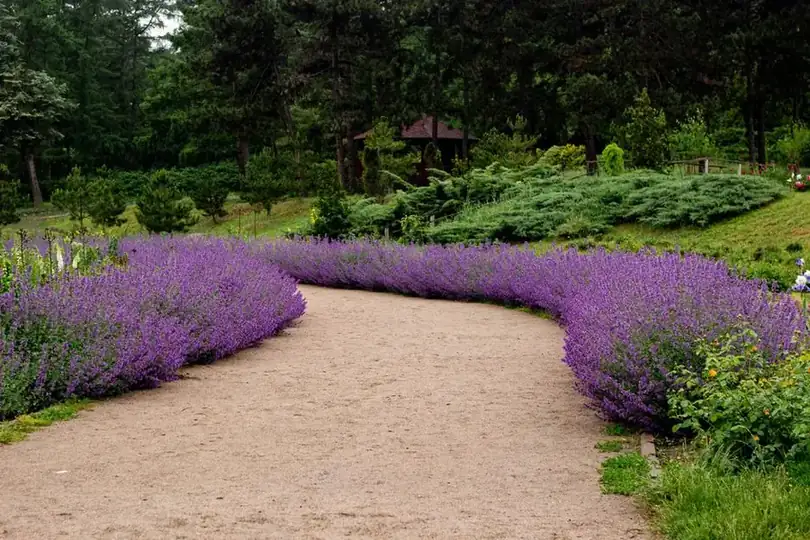
Chalk gardening is the reverse deal: an easy soil to work in every season, that feeds and waters almost nothing. The plants that shine on it are the Mediterranean and coastal crowd - lavender (this is where those billowing hedges live), rosemary, cistus, santolina, catmint spilling over path edges, verbascums, scabious and the chalk-down natives that have been thriving on the Chilterns for centuries. Silver or grey leaves are the tell: that colouring is sun armour, and it usually signals a plant built for thin, dry, alkaline ground. The RHS guide to chalky soils is the reference worth bookmarking.
What chalk will not forgive is acid-lovers. Rhododendrons, camellias, most heathers and blue hydrangeas turn yellow and sulk as the alkalinity locks iron away from their roots - no amount of feeding fixes chemistry. Grow them in pots of ericaceous compost or not at all. The other quiet failure is anything lush and thirsty: delphiniums and hostas can be done on chalk, but only with an irrigation habit you’ll be married to every July.
Clay’s two seasons: swamp in February, concrete in August
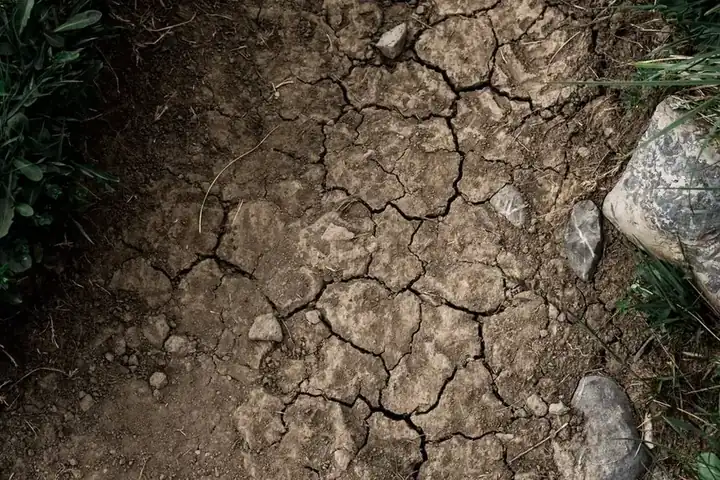
The complaint we hear most about plateau gardens isn’t fertility - it’s that the same border is a bog in winter and fissured like a dry riverbed by August. Both faces are the same property: clay swells when wet and shrinks as it dries, and in a hot summer the cracks can run deep enough to tear fine roots apart. Neither face means your garden is broken. It means plant selection has to respect both extremes, not just the one you noticed at purchase time.
For the wet end of the year, that rules out anything that hates winter wet feet - which is the real reason plateau lavender dies, long before cold gets a vote. For the dry end, it favours deep-rooted perennials over shallow, fibrous ones. And it makes timing near enough everything: a plant put into clay in September gets six mild months to root before its first drought, while the same plant planted in May meets the cracks with a root system the size of its pot.
Trees and hedges: where the two soils really part company
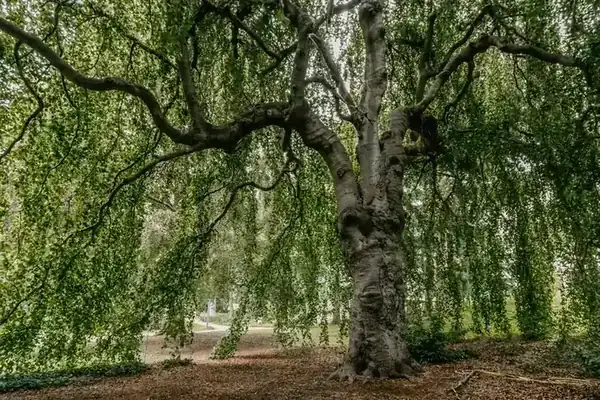
Get a perennial wrong and you lose a season. Get a tree or a hedge wrong and you lose a decade, so this is where the soil question pays its biggest dividend. The classic trap is beech. It’s the great tree of the Chiltern chalk and it makes a superb hedge on free-draining ground - but its shallow roots resent waterlogged clay, and a beech hedge on a wet plateau garden will limp and gap for years. The lookalike answer is hornbeam: near-identical crinkled leaves, same coppery winter hold, and completely untroubled by heavy, wet ground. It’s the hedge we specify most on the clay side of the city.
On the chalk itself, the palette flips. Beech, yew, box, field maple and whitebeam are all at home in alkaline, droughty ground - yew in particular makes the darkest, calmest backdrop a garden can have and asks nothing once established. Fruit matters too: apples on clay generally romp away, while stone fruit like cherries and plums appreciate the sharper drainage of the valley soils. Whatever you choose, plant trees small. A whip or a feathered tree establishes faster than a semi-mature specimen in both soils, and on chalk the difference is dramatic - big rootballs sit in their planting pits like plugs in a bath.
Improve the soil you have - don’t try to swap it
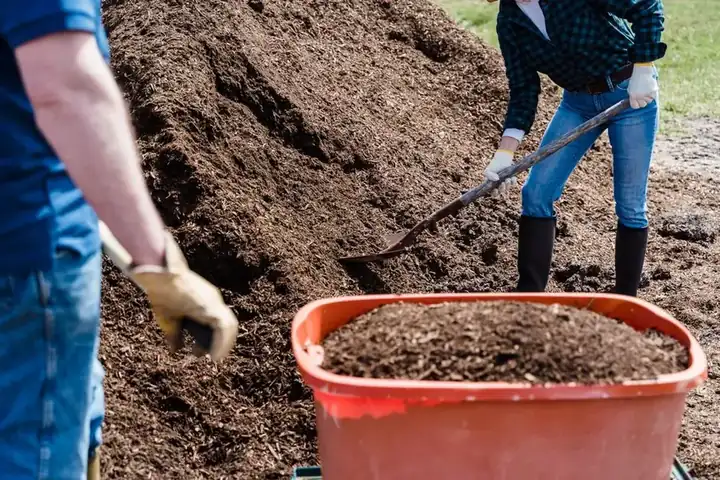
There’s a persistent fantasy that enough digging and enough bags of compost can turn one soil into the other. It can’t - you’d be amending metres deep, and the ground water and chemistry underneath would undo it anyway. What improvement can do is soften each soil’s worst habit. On clay, an annual autumn mulch of composted organic matter, five to eight centimetres thick and left for the worms to pull down, gradually opens the structure, eases both the winter sponge and the summer cracking, and does more good than any amount of digging - which on clay mostly creates smeared pans and buried problems. Coarse grit helps at planting time around individual root zones; wholesale rotavating does not.
On chalk, the same mulch plays a different role: it’s less about structure and more about moisture and a slow drip of nutrients into a soil that leaks both. Either way the principle holds - work with the soil’s grain and choose plants that want what you have. If the whole garden is being rethought rather than just the borders, that principle scales up; our piece on renovation versus full redesign covers when replanting alone is the right call.
Common questions
My garden seems to have both soils - is that possible?
Genuinely, yes, especially on the slopes between plateau and valley where the clay cap thins out. It’s common to find heavier ground at one end of a garden than the other, and old building work muddies things further - Victorian and postwar builders routinely buried rubble and subsoil where borders now sit. Dig test holes in each area you plan to plant rather than assuming one result covers the plot.
Can I make my chalky soil acid enough for rhododendrons?
Not in open ground, in practice. Sulphur treatments can nudge pH briefly, but chalk’s buffering pulls it straight back and the groundwater is alkaline too. Grow acid-lovers in generous containers of ericaceous compost, water them with rainwater rather than tap water, and they’ll be happy; fight the ground itself and you’ll lose slowly and expensively.
When is the best time to plant into St Albans clay?
Early autumn, comfortably. September and October give roots warm, moist, workable soil and a long run before summer drought, while spring planting shortens that window and pushes young plants straight into the cracking season. Avoid planting in midwinter - the ground is cold and airless, and walking on sodden clay to plant does real structural damage that lasts years.