
Planting Design In St Albans
Is the planting the part you can never get right?
Borders composed for structure in February as much as colour in June, matched to the soil that is actually in your garden.
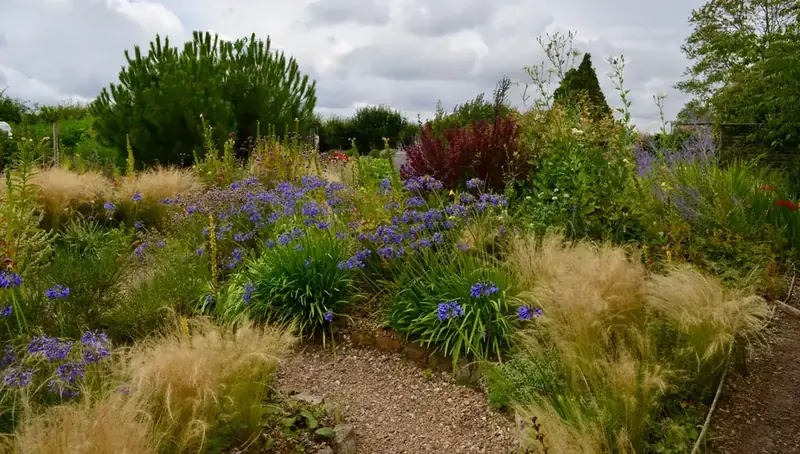
Anyone can make a border look good for the fortnight after the garden centre run. A designed planting scheme is a different object: it has a shape in January, a succession that hands colour from bulbs to perennials to seed heads without a gap, and a species list chosen for the soil you have rather than the soil the label assumes. Around St Albans that last part does the heavy lifting - within our patch the ground swings from sticky clay-with-flints to chalk you can hit at a spade's depth, and the same plant list cannot serve both.

Ask About A Planting Plan
A few details about the garden is all we need - we will be in touch to arrange a time to come and see it. No charge for the visit and no hard sell afterwards.
The Business Behind It
Plants That Arrive When The Plan Needs Them
Suppliers kept on good terms.
A planting plan is only as good as the plants that turn up to fill it. Mark spends a good deal of time keeping on good terms with suppliers, and it is time well spent: a supplier who values the relationship is more likely to offer better rates and quicker delivery.
Planting day is organised like every other day on the job, written down the evening before. Albert keeps the office running in the background, so if you have a question about timing, someone picks up the phone.
The Case For It
What A Designed Scheme Does That Plant Shopping Cannot
Structure that survives December
Evergreen bones, clipped forms and grasses that stand through winter are placed first, flowers second. It is the reason designed borders look intentional in the dead months instead of like an empty stage.
A plan written to your actual soil
We test pH and dig inspection pits before writing a single plant name. Clay-with-flints gardens get one palette, thin chalk gets another - and the plants stop being a lottery.
Succession, not one big June
Bulb layers under perennials, early clematis over late roses, asters carrying September - the scheme is plotted month by month so something is always taking over as something else steps back.
Right plant, right quantity, right size
The plan states quantities and pot sizes, so the budget buys drifts that read as design rather than singles that read as a collection. And where instant effect matters, we specify semi-mature stock knowingly, not accidentally.
Planted by the people who drew it
Setting out is half the art - the drawn plan is adjusted by eye on the ground, plant by plant. Schemes that are couriered as a PDF and planted by whoever is around lose their composition before they start.
A maintenance load you chose
Every scheme is designed to a stated number of hours per month, agreed with you first. There is no virtue in a border that needs a head gardener you do not have.
- Every Garden Starts On Paper
- Design First Every Garden Starts On Paper
- Initial Garden Consultations
- Free Initial Garden Consultations
- Design Through To Planting
- One Studio Design Through To Planting
- Itemised Costs Before Work
- Written Itemised Costs Before Work
Before You Choose
What Separates A Planting Plan From A Plant List
A real planting plan is drawn to scale, with every plant positioned, named and counted - you could hand it to another professional and they could build the border from it. If what you are offered is a mood board and a promise, you are buying the shopping trip, not the design. Ask to see a plan from a previous commission and check it has quantities on it.
Ask how the designer established what your soil is. The answer should involve holes. Hertfordshire is a county where two gardens a mile apart can sit on heavy acid-leaning clay and free-draining alkaline chalk respectively, and any plan written without test pits is written for an average garden that does not exist.
Ask what the scheme looks like in February, and watch whether the answer is specific - which stems, which seed heads, which evergreen forms hold which corner. Designers who can only describe their borders in June have designed you a border for June.
Compared
A Designed Scheme, The Trolley Method, Or The Landscaper's Mix
Three ways borders get filled, and where each one ends up after a few seasons.
| Designed planting scheme | Garden centre trips | Landscaper's standard mix | |
|---|---|---|---|
| Matched to your soil | Species chosen from test pits and pH | Chosen from what looked good in flower | Same list as the last ten jobs |
| Winter appearance | Designed - evergreens, stems and standing grasses | Accidental - usually bare soil and hope | A few tough evergreens, evenly spaced |
| First-year losses | Low, and replaced where they occur | High - wrong plant, wrong place, no aftercare | Moderate - tough stock, poor soil prep |
| Spend over five years | One planned investment plus modest edits | Quietly enormous - replacement is the habit | Low at first, then a redo when it disappoints |
| How it reads | Composed - drifts, rhythm, repetition | A collection of individual purchases | Tidy, anonymous, could be anywhere |
| Ageing | Knits together and improves each year | Gaps, thugs and regret by year three | Static - never bad, never good |
Our Process
How A St Albans Garden Project Runs
Seven stages, in the same order every time. The gardens that disappoint are almost always the ones that jumped from a quick quote straight to the diggers, with no drawings for anyone to build to.
-
Garden consultation and site survey
We walk the garden with you and listen more than we talk. Then the measuring starts: levels, orientation, drainage behaviour, existing trees worth keeping, and test pits to find out what soil you genuinely have rather than what the area is assumed to have.
-
Concept design
A scaled masterplan showing the whole garden - spaces, routes, levels, structures and planting zones - with mood imagery for materials and atmosphere. This is where you react, argue and change things. Far cheaper to move a terrace on paper than in stone.
-
Detailed design and planting plan
The agreed concept is developed into construction drawings and a species-by-species planting plan: setting-out dimensions, wall and step details, levels, lighting positions, and every plant named with its quantity and pot size.
-
Itemised written costs
Because the design is fully drawn, the build can be priced properly - each element itemised, so if the figure needs trimming you choose what changes rather than watching quality quietly disappear from everything.
-
Landscaping and construction
Groundworks, drainage, terracing, walls, steps and structures, built off the drawings by our own landscaping team. Setting-out is checked against the plan, and sub-bases and falls are treated as the point of the job, not the boring bit before the paving.
-
Soil preparation and planting
Beds are decompacted and improved before a single plant goes in - on this area's clay-with-flints and chalk that preparation decides whether a border establishes or sulks. Then the planting plan is set out on the ground, adjusted by eye, and planted.
-
Handover and first-season aftercare
We walk the finished garden with you, hand over the plans, plant list and care calendar, and come back during the first season - because a designed garden is at its most vulnerable in its first year, not its first week.
Detail
Two Soils, Two Palettes
The plateau gardens of this area - most of St Albans, Harpenden and Chorleywood - sit on clay-with-flints: fertile, moisture-holding, slightly acid, cold in spring. It is magnificent ground for roses, hydrangeas, hornbeam, cornus and the lush late-summer border, provided the preparation deals with its winter wet. The valley and southern gardens - Welwyn, parts of Berkhamsted and Hemel - are chalk: lean, alkaline, free-draining, warm early. That is lavender, salvia, iris and grasses country, where drought resilience comes free but hungry plants starve.
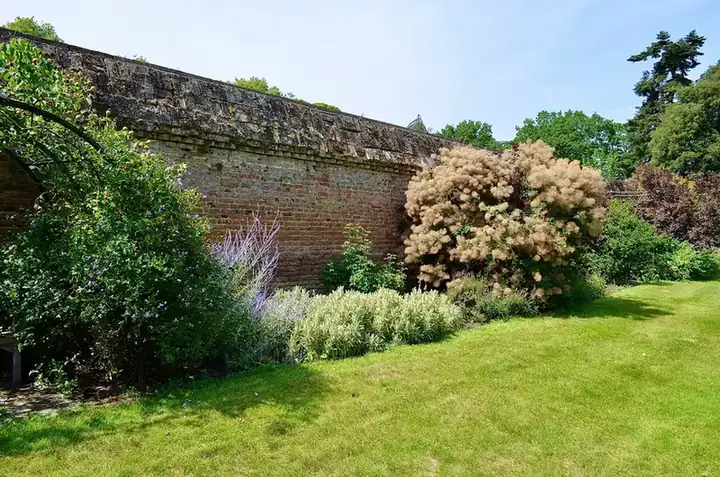
We write every scheme to whichever ground the test pits reveal, and sometimes to both within one garden. And because planting reads best against structure that was planned with it, plenty of planting commissions arrive alongside a landscaping project - the borders and the walls that back them designed as one composition.
Reassurance
What Standing Behind A Garden Means
- The construction underneath it all
- Terraces, walls and steps fail from below, not above - a thin sub-base, no drainage behind a retaining wall, mortar where there should be movement. We build those hidden layers as if they were the visible ones, because in three winters' time they might as well be.
- Plants replaced if establishment fails
- Planting is living stock and a small percentage of losses in year one is horticultural reality. Where a plant we supplied and planted fails despite reasonable care, we replace it - and the aftercare visits exist partly to catch problems while they are still small.
- Built to the drawings, checked against them
- The detailed design is not a sales document, it is the build contract. Setting-out, levels and materials are checked against the drawings as the work proceeds, and you can hold the finished garden up to the plan line by line.
- Still answering the phone afterwards
- A garden is not finished at handover - it establishes over seasons. When a question comes up in year two, you will reach the people who designed and built it, not a voicemail that never calls back.
Budget
What Planting Design Costs Around St Albans
£4,000 – £20,000
A planting plan with supply and planting for a typical pair of main borders sits toward the lower end; whole-garden schemes with semi-mature structure, bulb layers and a season of aftercare visits reach the upper end.
Indicative band for projects of this kind in our area, VAT included. The real number comes off the drawn design as an itemised written cost.
See the full cost guideQuestions
Planting Design Questions
- When is the best time to plant a new scheme?
- Autumn, by a distance, for most hardy stock - the soil is warm, the rain is free, and roots establish all winter so the scheme hits its first spring already at home. Spring is the second window and the right one for grasses and the more borderline-hardy perennials. Container-grown plants allow summer planting when a project timetable demands it, but it buys a watering commitment. We plan the planting date into the design programme rather than treating it as whenever the build happens to end.
- How long before the borders look established?
- Honest answer: one full growing season to look intentional, three to look established, five to look like the photographs. Perennials move fastest - many read as mature by the second summer. Shrubs take the middle distance, and structural plants are the long game unless semi-mature sizes are specified, which is exactly what they are for. The plan is drawn at five-year spreads with the gaps managed in the meantime, not planted at day-one density that turns into a thinning job.
- How much maintenance will a designed scheme need?
- As much as we agree it should, and no more - maintenance load is a design input here, stated in hours per month before the plan is drawn. A gravel-and-grasses scheme can idle along on an hour or two; a layered mixed border with roses earns its keep with more. What a designed scheme never needs is the constant compensating - staking floppers, replacing failures, fighting thugs - that fills weekends in borders assembled by impulse.
- Can you replant existing borders rather than starting again?
- Yes, and it is some of the most satisfying work we do. Established gardens usually hold real assets - a good tree, mature shrubs worth renovating, bulbs nobody remembers planting - and the scheme is designed around what earns its place. We lift and divide what is keepable, edit what is not, fix the soil, and weave the new plan through the survivors. It costs less than clearance and starts from ten years of maturity instead of zero.
- Do new borders need an irrigation system?
- Usually not, if the plant selection respects the soil. On our chalk gardens we lean into drought-tolerant palettes that shrug off dry summers once established - they need first-year watering and little after. On clay the problem is more often winter wet than summer drought. Where a client wants lusher planting than the ground would naturally carry, or containers and hedging on free-draining ground, we specify simple dripline irrigation honestly rather than let the scheme quietly depend on hand-watering nobody will do.
- Will you tell us what everything is?
- You get the full planting plan and a plant schedule - botanical and common names, positions, quantities - plus a care calendar saying what to do to what, and when, through the year. Some clients laminate it for the shed; some hand it straight to their gardener; either way the knowledge stays with the garden. We would rather demystify the scheme than make ourselves its priesthood.
Feedback
What Clients Say
Rated 5 out of 5
“We had lived with a sloping, unusable lawn in Batchwood for eleven years and assumed it was just what the garden was. The masterplan split it into three levels with a long bench built into the top retaining wall, and we now eat outside from April to October. The bit that impressed me most was the drainage they insisted on putting behind the walls - invisible, and clearly the reason nothing has moved.”
Rated 5 out of 5
“The house was rebuilt two years ago and the garden never caught up - a builder's lawn and a patio that faced the wrong way. They redesigned the whole plot around the new kitchen's sightlines and put in planting with real maturity. Neighbours assume the garden came with the rebuild, which I think is the point.”
Rated 5 out of 5
“What we wanted was borders like the ones you see at proper gardens, and what we had was clay you could throw pots with. The planting plan came with every species named and a paragraph on why it would cope with our soil. Two summers in, the border is better than the photographs they showed us at concept stage.”
Rated 5 out of 5
“An outdoor kitchen was my husband's idea and I was sceptical it would ever be used. Because the gas, power and lighting all went in before the paving, it looks built-in rather than bolted on, and we cooked outside more or less every weekend last summer. The festoon lighting on the pergola was their suggestion and it makes the whole thing at night.”
Rated 5 out of 5
“A proper process from start to finish. Survey with test pits, a concept we pushed back on twice without any sulking, then a build crew who turned up when they said and swept the drive every evening. The care calendar they left us is pinned inside the shed door and actually gets used.”
Often Paired With
Garden Landscaping
The structural side of a garden - terracing, walling, steps and drainage - built from the design drawings, not improvised on site.
Read moreOutdoor Living Spaces
Kitchens, pergolas, lighting and heat, planned as one scheme so the cables and gas runs go in before the paving does.
Read moreCoverage
Areas We Cover
We design and build gardens across St Albans and the towns west and north of it, from Radlett up to Welwyn and out through the Chilterns edge to Berkhamsted. Not listed? Ask anyway - we take on projects a little further out where the garden is interesting.
- St Albans
- Harpenden
- Radlett
- Berkhamsted
- Rickmansworth
- Chorleywood
- Watford
- Hemel Hempstead
- Wheathampstead
- Welwyn
Or jump straight to a service
Give The Borders A Plan Worth Following
The first visit costs nothing and commits you to nothing. We look at the space, ask what is not working, and tell you plainly what it could become and roughly what that costs - before any design fee enters the conversation.