
Low-Maintenance Garden Design In St Albans: What It Really Takes
Superior Garden Design St Albans
Almost every brief we take in St Albans has the same two words somewhere in it. Low maintenance. What people mean by it varies wildly, and that gap is where a lot of disappointment comes from. Some mean “I am on an early Thameslink to St Pancras and back after dark, I want to sit in it at the weekend and do nothing.” Some mean “I quite like gardening but I have two children under five.” One client meant “no lawn, no hedges, no pots, and I never want to own a pair of secateurs.” All three are reasonable. They are also three different gardens. So before anyone talks about gravel or porcelain or plants that “look after themselves”, the useful question is how many hours a month you are honestly willing to give it. Answer that and the design follows. Skip it and you end up with a garden that is tidy in the brochure photo and a chore by the second July.
Low maintenance is a number, not a style
Here is a rough scale we use in first meetings. A traditional family garden with a lawn, mixed borders, a hedge or two and a run of pots wants somewhere between eight and twelve hours a month through the growing season, and that assumes you are efficient. Halve that and you are at what most people picture when they say low maintenance: an hour or so at the weekend, a bigger tidy in spring and autumn. Halve it again and you are into what we would call a near-zero garden, which is achievable but limits what the garden can be.
None of those numbers make a garden good or bad. The point is to pick one on purpose. When we set up a planting design we are effectively spending your hours for you, and it is much easier to spend them well if we know the budget. A client in Jersey Farm told us “two hours a month, and I want it to look like more than that.” That is a brief we can work with, and a far better one than “low maintenance please.”
The commuter arithmetic
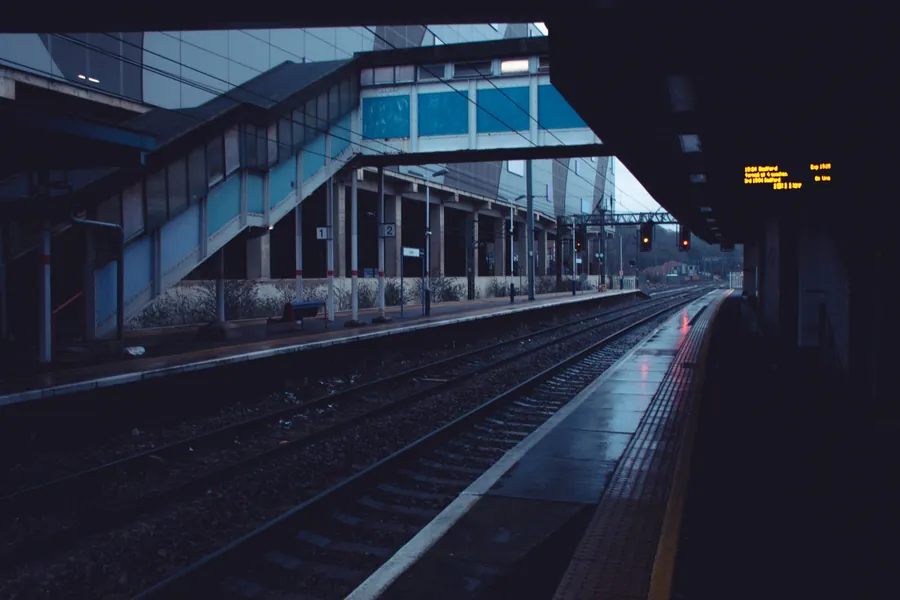
St Albans is a commuter city and pretends otherwise only at weekends. A large share of the working households we design for are out of the house from before eight until after six, and the garden only really exists for them on Saturdays, Sundays and light summer evenings. That changes the design in a way people rarely spell out. Anything that needs attention on a Tuesday in June is going to be neglected, and a garden that punishes neglect is the wrong garden for that household.
So we design for the calendar people actually have. Jobs get pushed into two seasonal blocks, a spring set-up and an autumn cut-back, with as little as possible in between. Plants that need staking, deadheading, dividing or spraying to look decent do not make the list. Watering gets automated where it is genuinely needed, and the dry Hertfordshire summers mean it is needed less often than you would think once the planting has settled in. And we are blunt about weekend jobs that will quietly get skipped: if you are not going to mow on a Saturday in August because you are at Verulamium Park with the kids, the lawn should be sized and shaped for a fortnightly cut, not a weekly one.
Where the hours actually go
Ask people what makes a garden hard work and they say weeding. Weeding is a symptom. The real generators of hours are more specific, and most of them are design decisions someone made years ago.
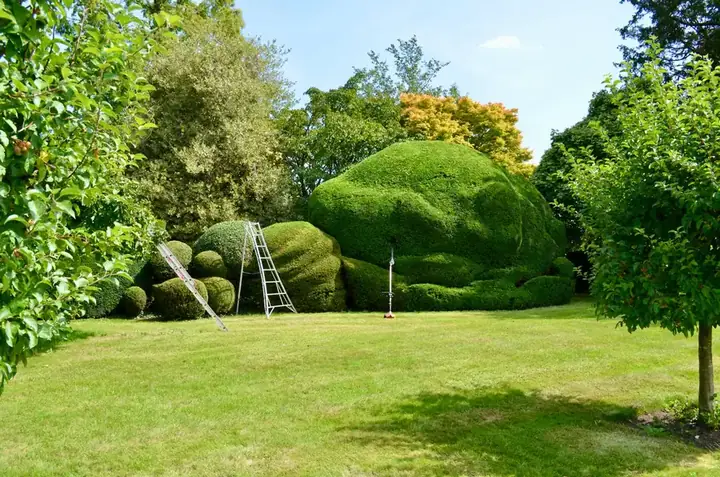
Edges are the first. Every metre of lawn edge against a border wants trimming every couple of weeks in summer, so a wiggly-edged lawn with island beds can carry sixty metres of edge in a modest garden. Hedges are the second: a mature privet or leylandii boundary around a Marshalswick semi is two or three cuts a year, off ladders, with the clippings to dispose of. Bare soil is the third, because bare soil grows weeds by default and every gap in a border is an invitation. Pots are the fourth, and the one people underestimate most - a dozen containers need water every day in a dry spell and feeding every fortnight. Seasonal bedding, hanging baskets and anything described as “annual” round out the list.
Notice what is not on it. Big shrubs are not, if chosen properly. Trees are not. Perennials that fill their space and die back cleanly are not. A garden can be dense with plants and still be quiet to look after, provided the plants were picked for the job. That is the whole trick, and the rest of this post is really about applying it.
Layout decisions that cut the chore list before a plant goes in
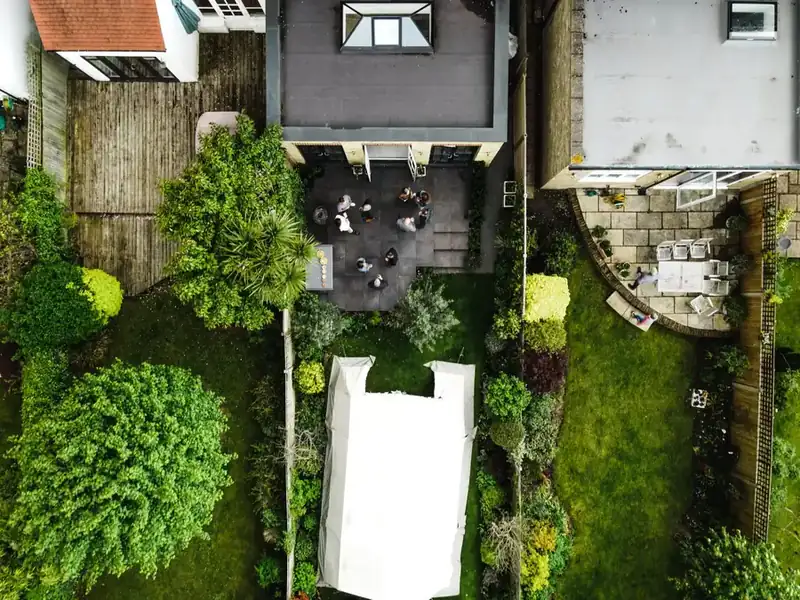
Most of the maintenance saving happens on the drawing, not in the plant list. A lawn with one long straight edge and two curves takes a fraction of the edging time of the same area cut into a kidney shape with beds dotted through it. A hard edge, a brick soldier course or a steel strip set flush with the turf, lets the mower ride over it and removes the strimming altogether. It costs more on day one and saves twenty minutes a fortnight forever.
Borders should be fewer and bigger. One deep border, a metre and a half or more, holds enough plants to close over the soil and shade out weeds. Five thin strips along fences never do, and they are awkward to get into. Paths should be wide enough to walk without brushing the planting, so you are not forever cutting things back off them. And the shed, the bins and the compost want a route that does not cross the lawn, or the lawn wears a track that needs repairing every spring.
One layout habit we see across newer estates like Highfield Park and around Napsbury is a small central lawn ringed by a narrow border, with a shed in the corner. It is the highest-maintenance arrangement per square metre that exists, because everything is edge. Turning it into a terrace, one large planted bed and a smaller rectangle of grass usually halves the work while making the garden look bigger.
Surfaces that stay tidy on their own
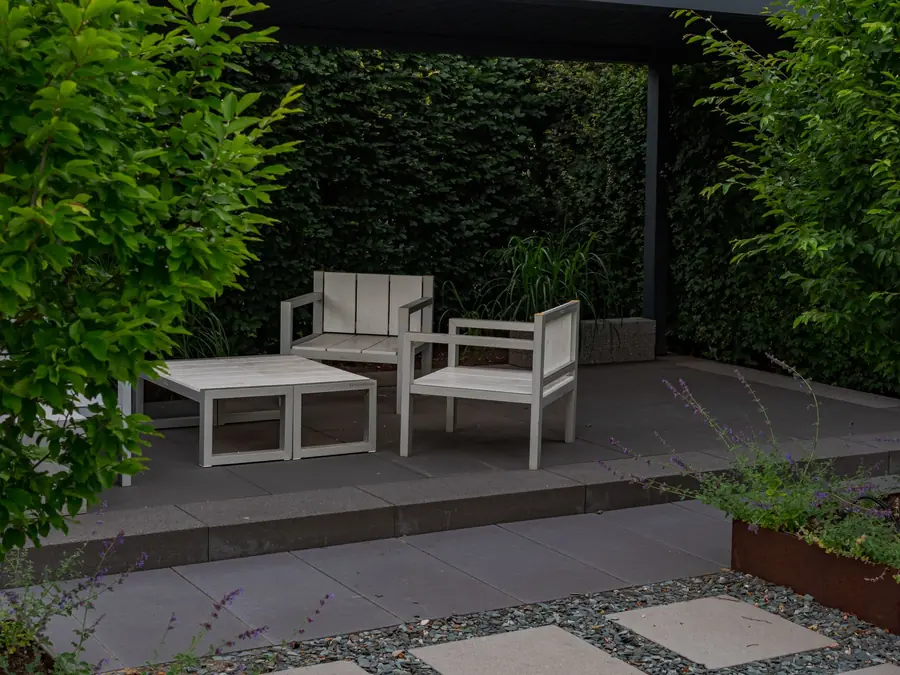
The terrace is where people spend the most and think the least about upkeep. Riven sandstone looks lovely for two years and then needs pressure-washing every spring to shift the algae, and the wide sand joints grow moss and weeds. Porcelain costs more and needs correct laying on a full mortar bed with a resin joint, but it does not stain, does not green over in a shady Bernards Heath garden, and a hose sorts it out. For anyone whose honest answer to the hours question was “as few as possible”, porcelain or a good clay paver with sealed joints is the sensible spend.
Gravel is the surface most often sold as low maintenance and most often regretted. Loose gravel with a membrane under it collects leaves, migrates onto the lawn, and grows weeds in the debris that builds up on top of the membrane within three years. It works well as a bound surface, or in a self-seeding gravel garden where the plants are meant to spread and the odd weed does not show. It works badly as a bare expanse next to a lawn. Decking sits somewhere in the middle: composite boards genuinely need only a wash, timber needs treating every year or two and gets slippery on the north side of a house.
Planting that closes over the soil

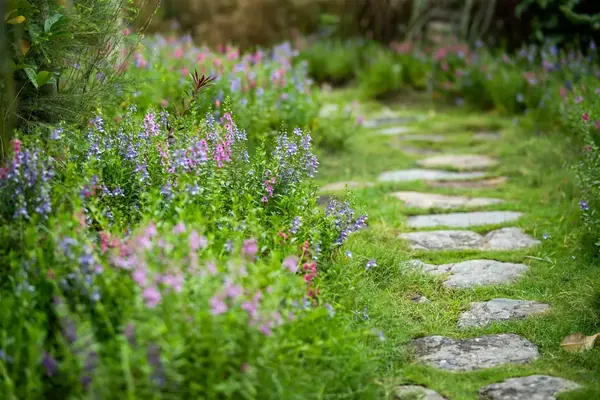
The single most effective low-maintenance move is to leave no bare soil for weeds to find. Ground cover does that job, and it is not the dreary carpet of periwinkle the phrase suggests. Hardy geraniums, epimedium, persicaria, brunnera and the low ornamental grasses knit together into a layer that is green from March to November and needs one cut-back a year. The RHS list of ground cover plants is a good place to see the range, and it is much wider than most garden centres stock.
Above that layer go shrubs and small trees chosen for their eventual size rather than pruned into it every year. A viburnum that wants to be two metres wide, planted where two metres is fine, is no work at all. The same plant crammed into a metre-wide strip is a pruning job every summer for the rest of its life. This is the part of a planting plan that pays for itself: getting the mature size right, once, on paper.
We also tend to plant in larger groups of fewer varieties. Seven of one thing in a drift is easier to look after than seven different things, because you learn what one plant needs and apply it across the group. It also looks calmer, which is most of what people mean when they say a garden feels “designed”.
The first two years are the work
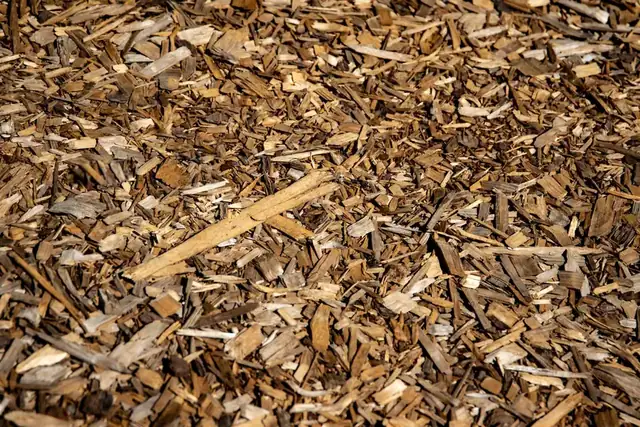
A low-maintenance garden is not low maintenance on day one. New planting needs watering through its first summer and probably its second, and the gaps between young plants are exactly the bare soil we have been trying to avoid. The fix is mulch, spread thick, about 75mm of composted bark over the whole border straight after planting and topped up the following spring. The RHS guidance on mulching covers the practical detail, and the short version is that a properly mulched border needs almost no weeding while the plants fill out.
After that the curve drops sharply. By the third summer a border planted this way should need a single cut-back in late winter, a top-up of mulch if the ground is showing, and not much else. Many of our clients book a maintenance visit for those two jobs and do nothing themselves between them. That is a legitimate way to own a garden, and it is what the design was for.
One caution about the tempting shortcut. Ripping out an old hedge or a mature tree to save on cutting is not always yours to decide. Several parts of the city sit inside conservation areas, where felling or heavy pruning of trees needs six weeks’ notice to the council, and protected trees need consent whatever the reason. Ask before the chainsaw comes out.
Common questions
Can a low-maintenance garden in St Albans still have a lawn?
Yes, and most of ours do. The lawn just needs to be a simple shape with a hard edge, sized for how it is actually used, and you need to accept it browning in a dry August rather than watering it. A smaller, well-shaped lawn with clean edges is less work than a big scruffy one and usually looks better too.
Is artificial grass the lowest-maintenance option?
It is low on mowing and high on everything else. It still needs brushing, clearing of leaves and washing where pets use it, it gets hot enough in full sun to be unusable on the warmest days, and it does nothing for the soil or wildlife underneath. For a small, shaded courtyard it can be the right call. For most St Albans family gardens, a reduced lawn plus dense planting gets closer to genuinely low effort.
How much extra does designing for low maintenance cost?
Usually very little on the design itself, because the decisions are about shape and plant choice rather than added features. Where it costs more is in the build: hard lawn edges, porcelain instead of sandstone, resin joints, and larger plants to close the gaps faster. Those are one-off costs that reduce a recurring one, and over ten years they come out well ahead.