
Garden Design In Radlett And Shenley: London Clay, Protected Trees, Green Belt Rules And Costs
Superior Garden Design St Albans
Most people who ask us about garden design in Radlett or Shenley have already done the hard part of the house. The extension is finished, or the rebuild is, and the garden is the one thing left that still looks like the last owner’s. The two places sit side by side in Hertsmere and get lumped together on estate agents’ maps, but they are not the same job. Radlett grew along Watling Street, and by 1914 houses already lined both sides of Loom Lane. Shenley is an older village on a ridge about 130 metres above sea level, with a hospital estate of 1934 on its western side that has since become housing. Same council, same clay, more or less, and two quite different sets of problems once you get into the garden. Below is how we approach each one, what the planning rules allow, and what it costs to design and build a garden at the plot sizes you find here.
Garden design in Radlett and Shenley: two places, two different briefs
In Radlett the plot is usually the big asset. The older houses along Loom Lane are Arts and Crafts in style, a few of them to a shared design by the architect George Wiggs, set well back up long front gardens held in by battered brick, flint and rubble retaining walls. Along Watling Street itself the plots are long and thin. Further out, on roads like Newberries Avenue, detached houses sit on deep gardens, and applications for outbuildings come up regularly on Hertsmere’s weekly planning lists. Plenty of Radlett houses have been replaced outright, so a common brief is a garden built for a house that has since been knocked down. Our Radlett garden design page covers the local side of that in more detail.
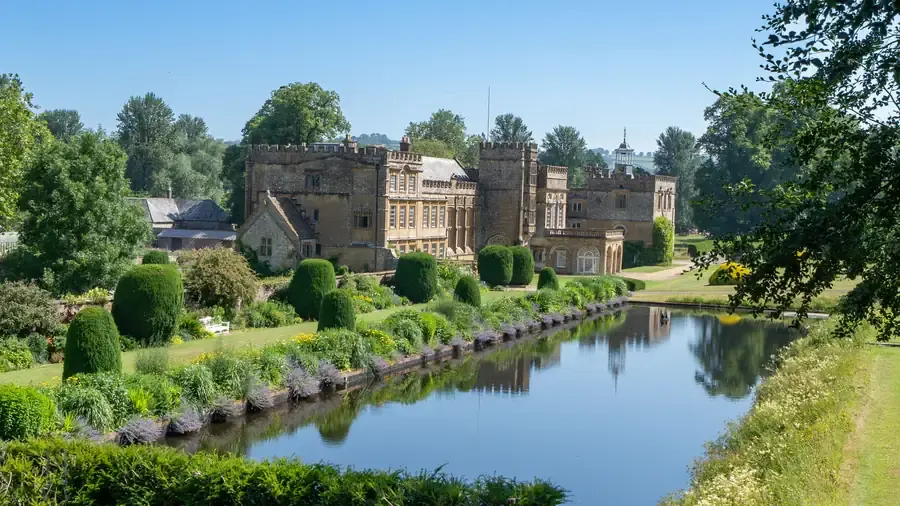
Shenley splits in two. The old village runs along London Road around the pond and the Cage, the little round lock-up on its bank, with cottages, mid-century houses on roads like Hillcrest Road and Mead Road, and lanes running out into farmland. Porters Park, on the north side of Radlett Lane, is the former Shenley Hospital estate. Middlesex County Council bought it in 1928, and the hospital that King George V and Queen Mary opened there in 1934 was later redeveloped for housing. Gardens there are newer, smaller and often bordered by much older trees that were kept when the estate was built. The Shenley Park Trust still runs the walled garden and about 45 acres of woodland, orchard and meadow next door.
So a Radlett brief tends to be about scale: dividing a long plot, fixing the levels, and making the garden match a house that has got bigger. A Shenley brief is more often about fitting a good garden into a modest space next to mature trees you are not allowed to touch.
Under the lawn: London Clay, gravel and the odd lump of puddingstone
Hertsmere sits where Hertfordshire’s chalk dips under the London Clay. The council’s own appraisal of the Radlett (South) Conservation Area describes Radlett as sitting between the Eocene clay of north-west London and the chalk of the Chilterns, close to the flinty glacial gravels around St Albans. It also mentions Hertfordshire puddingstone, the rare natural conglomerate that turns up as scattered lumps around Aldenham and Radlett. If your digger hits something that looks like a fruit cake set in concrete, that is probably what it is.
In practice most Radlett gardens are on heavy clay, with gravel caps on some of the higher ground towards Shenley. The Tykeswater stream runs parallel to Cobden Hill, the southern end of Watling Street, hidden behind the houses on the road. The same appraisal records residents worrying about clay soil, shallow foundations on older houses and underground watercourses whenever basements come up. You will feel it in the garden too. Lawns stay soggy all winter, and in a dry August the same ground shrinks and opens up in cracks you can lose a trowel in.
Shenley’s ridge is a little different. Hertsmere’s Shenley appraisal describes mainly clay geology under acidic, seasonally waterlogged soils, with loamy drift on the higher ground around the village. That acidity matters for planting. Plants that sulk on the chalk around Harpenden, such as camellias, pieris and some of the smaller rhododendrons, can do well in a Shenley garden if they are raised slightly out of the winter wet.
On site that turns into three rules we work to.
- Every terrace needs a proper fall and a real outlet for the water. On clay, a soakaway only works if a percolation test says it will, so we test before we draw one.
- Lawns on compacted clay need relieving and draining before anyone lays turf. Grass over rubble from a rebuild never recovers.
- Level changes should balance cut and fill on site. Muck-away from clay is slow and expensive, and spoil that sits in a pile through one wet winter stays wet.
Designing around protected trees in Radlett and Shenley
Both places are thick with mature oak, hornbeam, lime and beech, and plenty of them are protected. Radlett has two conservation areas, North and South, and Shenley’s was first designated in 1969. Its western section now takes in around 40 acres of the former hospital land beside Radlett Lane, after the boundary was redrawn in 2012. Inside any conservation area you have to give the council six weeks’ written notice before cutting back or felling a tree with a trunk more than 75 millimetres across at 1.5 metres high. Outside them, individual trees and groups may still carry a tree preservation order. The Hertsmere tree preservation order pages list current orders and explain how to ask about a specific tree.
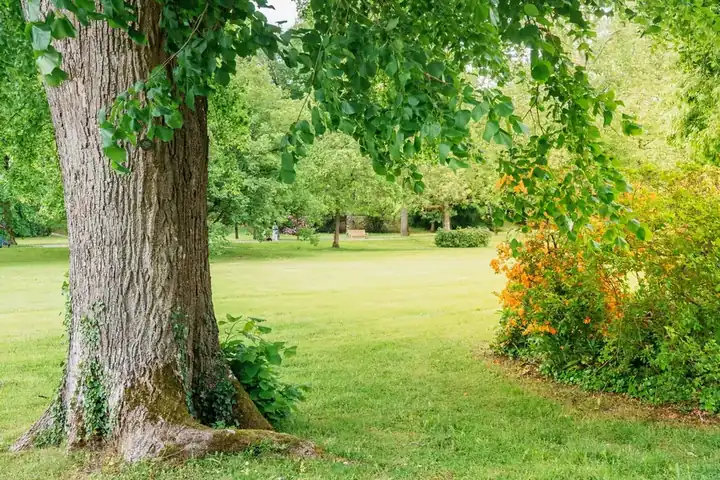
The Radlett (South) appraisal makes a point we have seen play out on site: protected trees should not be taken down just to get demolition or contractors’ vehicles in. It applies to a garden build just as much. Access routes for a mini digger, skip positions and material stores all have to be planned around the root protection areas, which are worked out from each trunk’s diameter and fenced off for the whole job.
For a designer that settles a fair bit of the layout before you have chosen a single paving slab. Paths that cross a root zone go on a no-dig build-up. Garden rooms go on screw piles placed clear of major roots. New planting under an established oak has to cope with dry shade in summer and wet clay in winter. We went through the general approach in our post on designing around trees and TPOs. The Hertsmere version is the same process with a different council and, often, older and bigger trees.
Garden rooms, walls and the Green Belt: what Hertsmere will let you build
Planning for both places is handled by Hertsmere Borough Council. Shenley Parish Council, and Aldenham Parish Council for Radlett, comment on applications but do not decide them. In Radlett those comments often lean on the Radlett Neighbourhood Plan. Three layers of rules matter for a garden project.
Permitted development
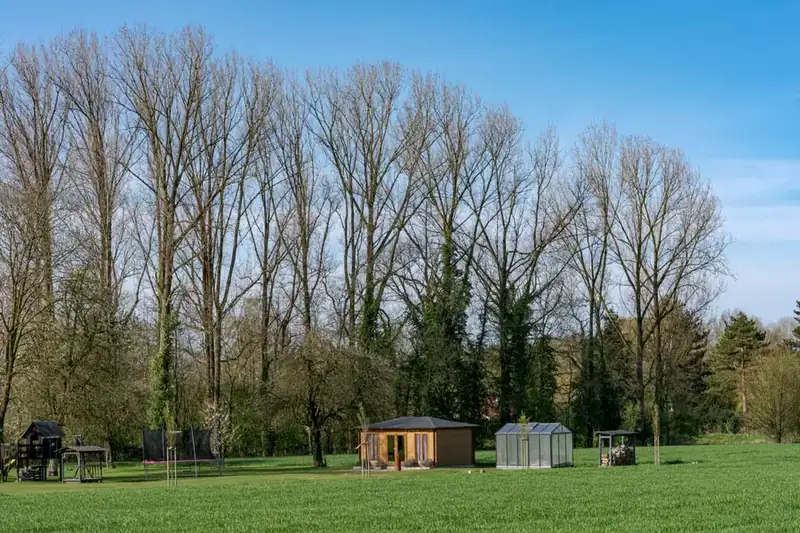
Most outbuildings in a back garden can go up without an application if they stay within the national limits: no more than 2.5 metres tall if within two metres of a boundary, 4 metres for a dual-pitched roof elsewhere, eaves no higher than 2.5 metres, nothing forward of the front of the house, and no more than half the garden covered. The Planning Portal’s guide to outbuildings sets out the full list. Fences and walls can go up to 2 metres, or 1 metre next to a road.
Conservation areas and Article 4
In Radlett’s two conservation areas and in Shenley’s, an outbuilding at the side of the house needs permission. So does demolishing a wall or fence more than 1 metre high beside a road, or 2 metres high elsewhere. On Loom Lane that is worth knowing before you touch the old flint and rubble walls. Shenley also has a 1995 Article 4 Direction covering houses on Hillcrest Road, Mead Road and Cage Pond Road, which removes some permitted development rights there. Check the details before assuming anything is automatic. The Shenley Conservation Area page links to the appraisal and boundary map.
The Green Belt
Radlett has been surrounded by the Metropolitan Green Belt since the 1950s, and on its edges the boundary line follows old plot and woodland lines, so the bottom of a garden can sit right next to it. Parts of Shenley village are still inside the Green Belt itself, and Hertsmere has been looking at redrawing the boundary around the village in its new Local Plan. Permitted development rights still apply in the Green Belt. The difference shows the moment you need a full application, for a larger garden room, say, or one with a toilet and kitchenette. At that point the council judges it against Green Belt policy, which asks whether it harms the openness of the land. A low, well-screened building placed close to the house goes down far better than a big one at the end of the plot. There is more on sizing, bases and power in our garden rooms guide.
Privacy after the house next door is rebuilt
Ask what people want from a Radlett garden and privacy usually comes up in the first few minutes. A two-storey replacement house next door, with a wider rear elevation and a glass balcony, changes how private your terrace feels almost overnight. In Shenley the issue is usually closer neighbours on the Porters Park estate, where gardens are shorter and upstairs windows look straight down the lawn.
What works on clay, roughly in order of how quickly it helps:
- Pleached hornbeam or lime. A raised hedge on clear stems blocks a first-floor window without darkening the lawn. Hornbeam loves clay. Bought at real size it costs from around £400 to £900 a tree planted, and the trees need a decent pit and good drainage beneath them.
- A pergola or garden structure by the terrace. Screening close to where you sit blocks far more of the view than a fence on the boundary, because of the angles. A frame two metres from your chair does more than a 2 metre fence twenty metres away.
- A mixed native hedge. It is slower, cheaper and better for wildlife. Shenley’s conservation appraisal recommends hawthorn, blackthorn, field maple, hazel, holly, spindle and crab apple when old hedges are replaced, and it is a good list for clay anywhere in Hertsmere.
- Fencing. It is quick, but 2 metres is the limit without permission, and in a conservation area a tall fence along a lane frontage will not be welcome.
Leylandii is not on the list. It grows fast, makes the soil next to it dry and hungry, and turns into a neighbour dispute within ten years.
What a Radlett or Shenley garden design and build costs
Prices here follow plot size and ground conditions more than anything else. A Shenley garden on the Porters Park estate and a third of an acre off Loom Lane can share a clay subsoil and still be a hundred thousand pounds apart, because almost every line on the quote grows with the area.
As a rough guide from the projects we price, assuming a complete redesign rather than a refresh:
- A large Radlett plot (Loom Lane, Watling Street, the bigger avenues) with 600 to 1,200 square metres behind the house: build costs commonly run from £90,000 to £220,000. The top end is for new terracing, retaining walls, drainage into the clay, lighting, irrigation, a garden room base and planting across the whole plot.
- A mid-sized Radlett garden of 250 to 500 square metres: usually £50,000 to £100,000.
- A Porters Park or Shenley village garden of 100 to 250 square metres: typically £30,000 to £65,000, with trees and access setting most of the variation.
Design fees usually come to between 8 and 15 per cent of the build. That covers the survey, concept, masterplan, planting plan and construction drawings.
A few local items move these numbers more than the choice of paving ever will. After a rebuild, breaking up compacted subsoil and digging out buried rubble can add several thousand pounds before any landscaping starts. Tree protection means fencing, sometimes an arboricultural method statement if the council asks for one, and slower no-dig construction inside root zones. Drainage into London Clay, whether land drains, a tested soakaway or attenuation crates, is where a cheap quote usually cuts corners. Long drives and tight side passages on detached plots mean small machines, more labour days and now and then a crane lift over the house. And mature pleached trees and specimen hedging are priced by height, which adds up quickly when the client wants the screen to work on day one.
If the whole plot cannot be done in one go, split it into phases. Get the full garden designed first, though, so drainage runs, cable ducts and tree protection go in the right place from the start. Our 2026 garden build cost guide has per-square-metre rates for paving, walls and planting if you want to test a budget before calling anyone.
Questions we get asked in Radlett and Shenley
Do I need planning permission for a garden room in Radlett or Shenley?
Often not, if it stays within permitted development limits: no more than 2.5 metres tall within two metres of a boundary, nothing in front of the house, and no more than half the garden covered. You do need permission for a garden room beside the house in a conservation area, and for anything on the Shenley roads covered by the 1995 Article 4 Direction where those rights have been removed. Larger buildings, or any that need a full application, are decided by Hertsmere Borough Council, which applies Green Belt policy wherever the land is in the Green Belt.
Can I cut back or remove a tree in my Radlett garden?
Check first. Trees inside the Radlett North, Radlett South or Shenley conservation areas with a trunk wider than 75 millimetres at 1.5 metres need six weeks’ written notice to Hertsmere before any work. Trees anywhere in the borough may also carry a tree preservation order, which needs formal consent. Hertsmere publishes its current orders on its website and can confirm whether a particular tree is covered.
Is the soil in Shenley different from Radlett?
Slightly. Both are mainly clay, which holds water through winter and cracks in a dry summer. Shenley’s ridge has acidic, seasonally waterlogged soils with loamier ground in places, so lime-hating shrubs such as camellias can do well there if planted a little above the winter wet. Radlett is heavier London Clay, with gravel on some higher ground. We dig trial holes on every survey, because the ground can change across a single garden.
How much does a garden design and build cost in Radlett?
For a full redesign of a large Radlett plot of 600 square metres or more, build costs commonly run from £90,000 to £220,000, and design fees from 8 to 15 per cent of that. Mid-sized gardens usually come in at £50,000 to £100,000, and smaller Shenley and Porters Park gardens at £30,000 to £65,000. Drainage into the clay, tree protection, access and repairing damage from a house rebuild are the items that move the price most.