
Trees In St Albans Gardens: TPOs, Conservation Areas And Designing Around Them
Superior Garden Design St Albans
A large tree is the one thing in a garden you cannot buy. You can order a terrace, a studio or a hundred metres of yew hedge, but a sixty-year-old oak or beech takes sixty years. Plenty of trees in St Albans gardens predate the houses beside them, especially on the older plots off Clarence Road, around Bernard’s Heath and on the deep interwar plots in Marshalswick. That age brings rules with it. A tree can be covered by a Tree Preservation Order, or protected simply because it stands in a conservation area, where cutting one with a trunk over 75mm across (measured 1.5 metres up) needs six weeks’ notice to the council. Beneath it sits a root zone that usually reaches well past the canopy, and wrecking it with a patio is the commonest way people kill the tree they hoped to keep. This guide follows the order we work in: check the status, map the roots, then design the paving, planting and light around what you’ve found.
Is the tree in your St Albans garden protected?
Find this out before anyone draws a line, because it changes what can go on the plan. St Albans City and District Council publishes its Tree Preservation Orders on its District Mapping Service: open the map, switch on the map layers, and under Planning Constraints tick Tree Preservation Orders. Conservation area boundaries appear on the same map. The council’s tree preservation orders page links to the map, lists the orders by reference number and has the forms for applying to do work. If the map leaves you unsure, say because an order covers a whole area or a group of trees and you can’t tell whether yours is in it, ask the council in writing and keep the reply.
One timing detail to know this autumn. The council moved to a new planning system on 8 October 2026, so tree applications now go in through the new portal, and decisions on pending cases are paused for part of October while the change beds in. If your build depends on a tree decision, allow for that slack.
The status check is part of our survey on every garden landscaping project, next to the levels, the drainage and the soil. We have never had a protected tree wreck a design. We have seen one wreck a build programme, when nobody looked until the excavator was already on the drive.
How the six-week notice works in a conservation area
A Tree Preservation Order and a conservation area work differently, and people mix them up. Under an order you apply for consent, and the council has up to eight weeks to decide; St Albans also runs a fast-track route that aims to decide by the end of the fourth week. In a conservation area with no order, you serve a notice instead (formally a section 211 notice) describing the work, and then wait six weeks. In that time the council can do nothing, which lets the work go ahead, or it can put an order on the tree if it thinks the tree matters to the area.
The government’s guidance on protected trees fills in the details most owners never get told. The 75mm limit is measured over the bark at 1.5 metres. With a multi-stemmed tree, one stem over the limit is enough to bring it into the rules. If the six weeks pass without an order, you have two years to carry out the work before you need to notify again. A dead tree still needs five working days’ written notice before it comes down. Only a tree posing an immediate risk of serious harm can be dealt with first and reported straight afterwards.
For design purposes this means trees in a conservation area should go into the brief with a six-week allowance against anything that touches them, crown lifting included. Lodge the notice while the drawings are being finished rather than once the contractor is booked.
Root protection areas: the circle that shapes the plan
The roots doing the work for a big tree are mostly in the top 600mm of soil and spread a long way sideways. The British Standard for trees near construction, BS 5837:2012, turns that into a number. The root protection area is a circle with a radius of twelve times the trunk diameter, measured 1.5 metres up. So a beech with a 500mm trunk gets a circle six metres in radius around it, which is about 113 square metres of ground. The calculation is capped at 707 square metres, a radius of 15 metres, which a trunk of about 1.25 metres reaches. The Woodland Trust’s explainer on root protection areas covers why the circle is often bigger than people expect, and why ancient and veteran trees get a wider buffer still.
We draw that circle on the survey before the concept starts, and it changes things straight away. On a typical 1930s semi in St Albans with a mature tree halfway down the garden, the circle can take up a third of the plot. Inside it, the standard expects no digging, no change in level, no compaction from machines or stacked materials, and no bonfires. Trenches for lighting cables, irrigation and drainage are the hidden risk, because they slice straight across roots that a terrace never touched. On clay-with-flints that matters twice over: compacted clay loses its air, the roots suffocate, and the tree declines over three or four years, by which time nobody connects it to the build.
Paths and patios near trees without digging
The usual way to make a patio is to dig out 150mm to 250mm, compact a sub-base and lay slabs on mortar. Inside a root protection area you can’t do any of that. If a path or seating area has to cross the circle, we build up from the existing ground rather than down into it. A geotextile goes over the surface, then a cellular confinement grid (a honeycomb of plastic cells) filled with clean angular stone, which spreads the load so it doesn’t press down on the roots. The finish on top has to let air and water through: bound or loose gravel, permeable resin, or setts on a free-draining bed. Solid concrete is out.
Building up raises the finished level, so that has to be designed in. A path near a tree usually sits 100mm to 150mm higher than it would elsewhere, with a timber or steel edge holding the build-up and the borders on either side shaped to meet it. Raised timber decking on small pad or screw-pile foundations, placed between the main roots after a careful hand dig, is the other option and often the better one under a big canopy, because it barely touches the ground. A curved path that follows the edge of the circle frequently does the job better than a straight one that cuts through it.
Walls, structures and front gardens have their own rules, set out in our guide to planning permission for garden landscaping in Hertfordshire. None of them mention root circles. On a mature plot, though, the circle usually decides more of the layout than the planning rules do.
Shade planting for St Albans gardens under a canopy
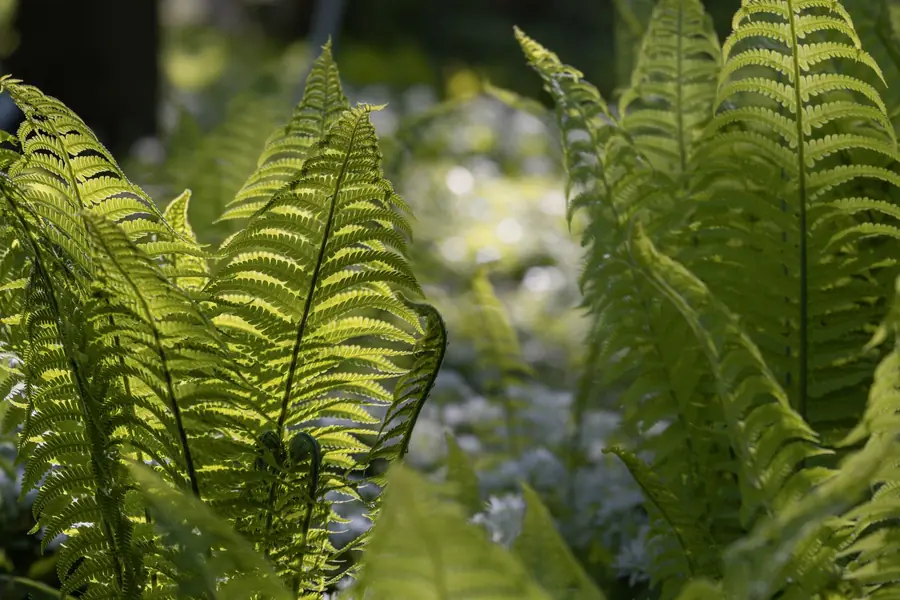
Under a mature beech or sycamore you are dealing with dry shade, which is harder than plain shade. The canopy keeps off a lot of the summer rain and the roots take most of what gets through. Clay-with-flints helps a little, as it holds water longer than the thin chalky soils towards Harpenden, but in a dry August the ground under a big tree is as hard as the patio.
What does well: Geranium macrorrhizum, which carpets almost anything; Epimedium, slow to get going and then impossible to kill; the woodrush Luzula nivea; male fern and the hart’s-tongue fern, which actually likes the lime in our soils; Brunnera for spring blue; Euphorbia amygdaloides var. robbiae; and Sarcococca for winter scent next to a path. Plant small, in pockets dug by hand between the roots, and never rotovate or pile new topsoil over the root zone. Even a few centimetres of new soil can cut off air from the fine roots. A yearly mulch of leaf mould or composted bark does the feeding instead.
Light is the other half of the job. The canopy’s shadow moves round through the day, so a seat that gets morning sun on the east side might be in deep shade by lunchtime. We plot the sun across the garden at different times of year and put the terrace where it actually catches the evening, which is often not the obvious spot outside the back door. The cool corner under the tree can then become what it suits: a woodland walk, a hammock, a bench for August afternoons.
When removing a tree is realistic
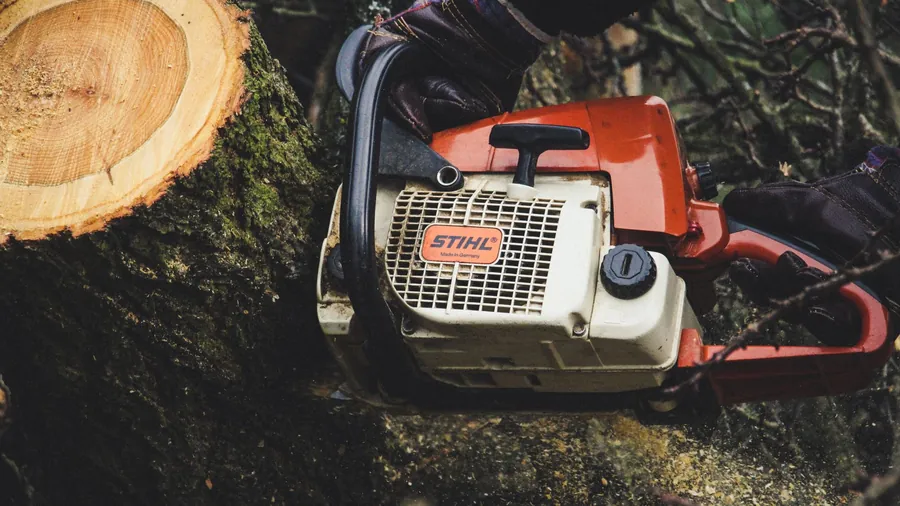
Sometimes the tree has to go, and it’s better to say so than to design around a tree that won’t last. The council is most likely to agree to removal when an arboriculturist’s report shows the tree is dead, dying or structurally unsafe. It is also likely to agree where there is real evidence the tree is causing subsidence. On the shrinkable clays around the district that is a genuine issue, but it needs an engineer’s investigation and level monitoring, not just a crack in a wall and a guess. Self-sown sycamore and ash saplings under the 75mm limit don’t need notice even in a conservation area, and clearing them early saves an argument later.
What generally won’t get permission: “it drops leaves”, “it blocks the view of the new studio”, or “it’s in the way of the patio”. If the tree is protected and the design needs it gone, the design has the problem. Expect conditions even when consent is given. Where a tree covered by an order is removed, the owner usually has a legal duty to plant a replacement, and the duty passes on with the house if you sell. A good plan picks the spot for that replacement from the start, so it gets the space it needs to grow up.
Crown work is more often the answer. Lifting the lower branches, thinning lightly, or reducing a limb that hangs over the house can let in a lot of light without spoiling the tree, and councils tend to look kindly on a modest, well-specified application.
Working with an arboriculturist
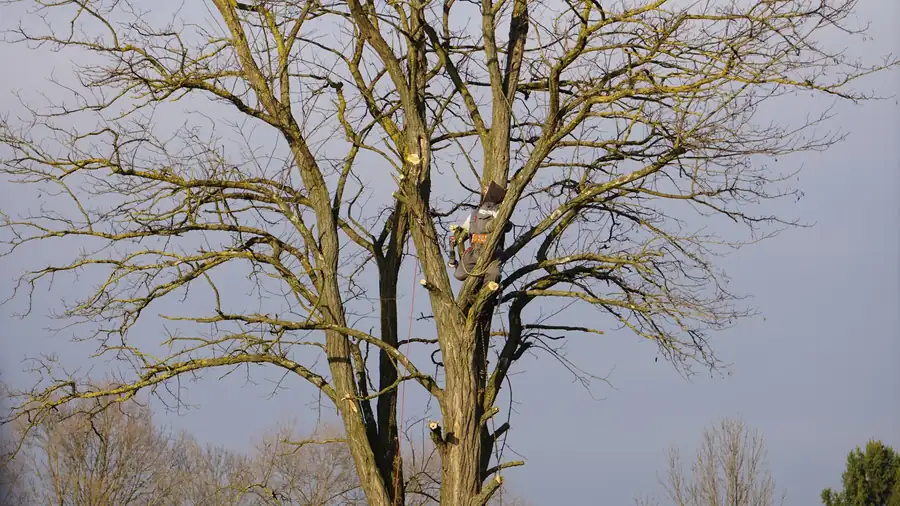
An arboriculturist and a tree surgeon are not the same person, though some firms do both. The consultant surveys trees, assesses their condition, produces the tree constraints plan showing each root protection area, and writes the method statement explaining how the build will avoid damaging them. The tree surgeon does the cutting. For anything that needs a planning application near trees, such as a garden room, a new driveway or a big change of level, the council will usually expect a survey and method statement to BS 5837 with the application. The Arboricultural Association keeps a directory of registered consultants you can search by postcode, plus a separate list of approved contractors for the cutting itself.
We bring one in at survey stage on any plot with a large or protected tree, so the root circles are on the drawings before the layout is fixed. During the build, the method statement turns into fencing: rigid barriers round each protection area, put up before any machine arrives and taken down last. Older houses with old gardens bring a lot of this together, as our post on designing gardens for period homes in St Albans explains. Honestly, most of the time the old tree is the best thing in the garden, and we’d rather move the terrace than lose it.
Common questions
How do I check if a tree in my St Albans garden has a TPO?
Use St Albans City and District Council’s District Mapping Service, switch on the map layers and tick Tree Preservation Orders under Planning Constraints. Conservation area boundaries show on the same map. If it is unclear whether your tree falls within an area or group order, ask the council in writing before doing any work.
Can I build a patio under a protected tree?
Often, if it stays out of the root protection area or is built without digging. Inside that area the surface has to be raised on a cellular confinement system over the existing ground and finished in something permeable, such as gravel or permeable resin. An arboricultural method statement will set out exactly how it is built.
How long does it take to get permission for tree work in St Albans?
In a conservation area with no TPO, you give six weeks’ notice and can go ahead if the council does not make an order. For a tree with a TPO, the council has up to eight weeks to decide an application, and its fast-track route aims to decide by the end of the fourth week.
Talk to us about a garden design that works around your trees in St Albans