
Garden Lighting Design In St Albans: What To Plan Before The Build
Superior Garden Design St Albans
From late October to early March it is dark in St Albans by the time most people get home from work, which means a garden without lighting is a garden you look at for about two months of weekday evenings a year and otherwise only see as a black rectangle in the kitchen glass. Garden lighting design fixes that, but only if it is decided early. On our builds the lighting layout is fixed before a single slab is ordered, because the fittings are the cheap, swappable part and the cable under the terrace is not. On a typical semi’s garden here, lighting is often around a tenth of the build budget, and nearly all the risk in it sits in the first fortnight of groundworks. This post covers what to settle at the drawing stage: where the cables run, how the light is layered, 12V against mains, the electrical rules, light spill near the green belt and the Ver, and what it all costs.
Why garden lighting in St Albans gets designed before the paving
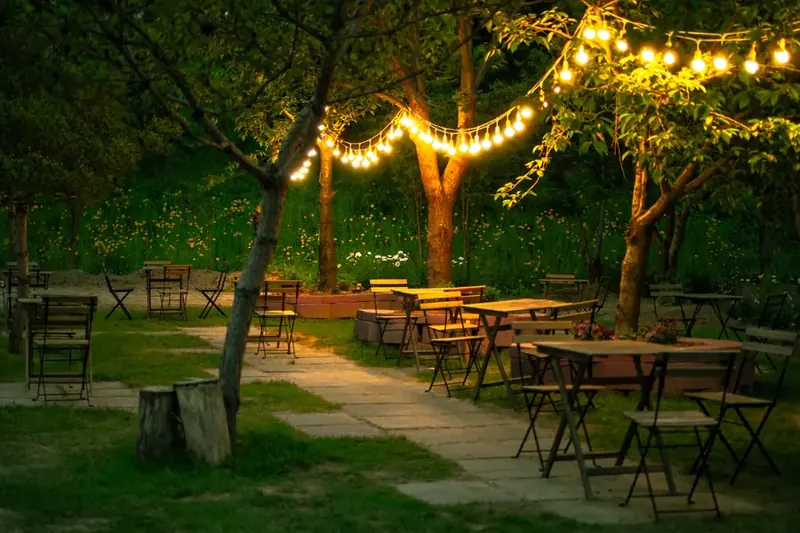
A lighting plan is really a cable plan with some nice pictures on top. Every uplight in a border, every recessed step light and every wall washer needs a supply, and that supply has to cross paths, terraces, lawns and planting beds to get there. Before the paving goes down, a cable run is a trench a spade wide with a duct dropped in. After it goes down, the same run means lifting stone, cutting new joints and hoping the replacement slabs match the batch that has spent two years weathering. Nobody budgets for that, and it usually doesn’t get done, which is why so many otherwise good gardens in the city have one floodlight on the back wall and nothing else.
So when we draw a scheme for garden landscaping or an outdoor living space, the lighting goes onto the same set of drawings as the levels and the drainage. Each fitting has a position, a cable route back to its transformer or junction box, and a note about what it sits under. The landscaper building it then knows that a duct needs to cross under the terrace 400mm from the step, not “somewhere near the middle”, and the as-built photos record exactly where it ended up. On the clay-with-flints that covers much of the city, a trench that has been dug and backfilled once also settles, so it pays to do it while the sub-base is being compacted anyway.
Layering the light: paths, steps, trees, walls and features

The schemes that look good use several kinds of light at low output rather than one kind at high output. We think about it in layers, and most gardens need three or four of them rather than all five.
Paths and steps
This is the safety layer and the one that matters most on the plots that fall towards the Ver below the abbey and Holywell Hill, where a garden can drop a metre or more from the back door. Recessed step lights set into the riser, or small fittings tucked under a coping, light the tread without shining into anyone’s eyes. Low path lights only need to put a pool of light on the ground every few metres. If you can read a book on the path, it is too bright.
Uplighting trees
One well-placed uplight under a multi-stem birch, an old apple or a field maple does more for a garden at night than a dozen fittings scattered along the fence. The light catches the bark and the underside of the canopy and gives the garden a far edge, so it reads as a space rather than a hole. Deciduous trees change through the year, which is part of the appeal: bare winter branches look entirely different from a full June canopy.
Washing walls and hedges
A wide, soft beam run up a brick wall or a clipped yew hedge lights a large surface very cheaply and bounces enough light back to make a terrace usable without any fitting pointing at the table. The old red and yellow stock brick in much of St Albans takes wall washing beautifully. Rendered extension walls can look flat, so we tend to graze them from close to the base instead, which picks out texture.
Features
A sculpture, a water bowl, a specimen plant in a pot. These are the accents, and they work best when there are only one or two of them, so the eye has somewhere to land.
12V low voltage or mains: which to choose
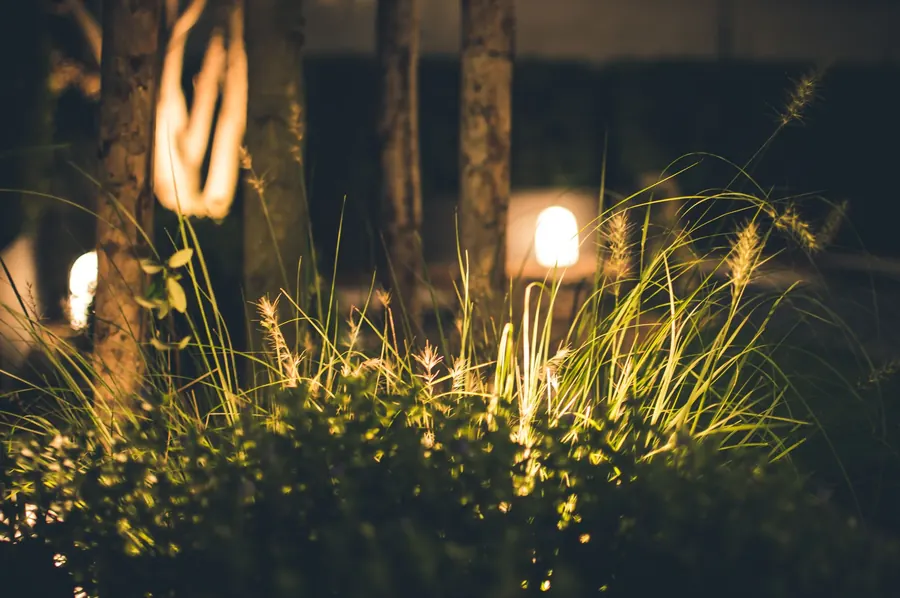
Most of the garden schemes we design are 12V or 24V low voltage. A transformer, usually in the house, garage or a weatherproof box near a socket, steps mains power down, and thin cable runs out to the fittings. The advantages are practical. Fittings on spikes can be moved as planting grows, which matters a great deal in a new border where the shrub you are lighting will be twice the size in three years. The cable is easier to route through beds. A nicked low-voltage cable is a nuisance rather than a danger. And LED fittings at these voltages draw very little power, often 2 to 5 watts each.
The limits are distance and load. Low-voltage cable loses voltage over long runs, so the far end of a 50-metre plot towards Harpenden or Wheathampstead needs heavier cable, a second transformer, or a mains feed down the garden with a transformer at the far end. That last option is common on bigger gardens and is where a little mains cabling earns its keep.
Mains (230V) fittings still have their place: a wall lantern by the back door, lighting in a garden room, an outdoor socket for a pressure washer or a string of festoon lights. Mains cable outdoors has to be armoured or run in a protective duct, buried and recorded, and everything on it has to be done by a qualified electrician. For a terrace and a few borders, low voltage is usually cheaper overall. For a long garden with a building at the end, a mixed system nearly always wins.
The electrical rules: Part P, BS 7671 and who signs it off
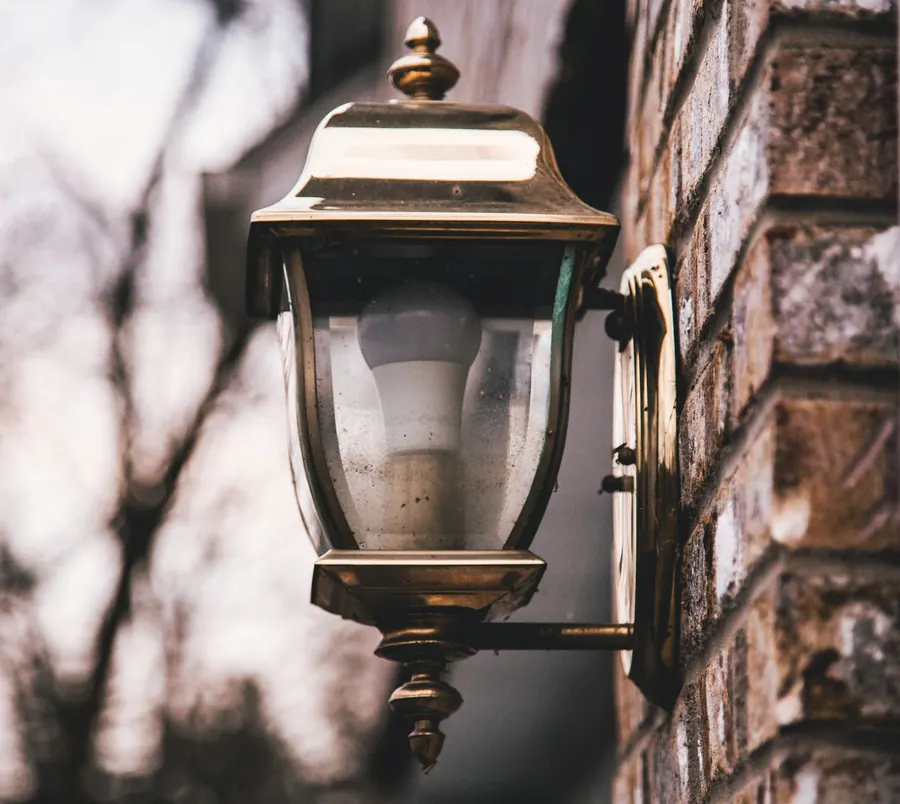
Electrical work in English homes falls under Part P of the Building Regulations. Since 2013, the notifiable categories are narrow: installing a new circuit, replacing a consumer unit, or altering circuits in a bathroom or a room with a pool or sauna. The IET’s summary of Part P in England and Wales sets out exactly which jobs need notifying. In practice, a garden lighting scheme of any size usually gets a dedicated new circuit from the consumer unit, so it is notifiable. The simplest route is an electrician registered with a competent person scheme, who certifies the work and notifies building control for you. Extending an existing circuit to a single outside light isn’t notifiable, but it still has to meet the wiring regulations.
Those regulations are BS 7671. The points that matter outdoors are protection and burial. Outdoor socket outlets and mobile equipment used outside need 30mA RCD protection, and in a domestic installation lighting circuits do too. Buried cable has to be armoured or run in a duct or conduit, laid deep enough not to be damaged by digging, and marked with warning tape above it. There is no single depth written into BS 7671, but around 450 to 600mm under lawns and beds is the usual practice, which keeps it below a border fork. Fittings need an IP rating to suit their position, with IP67 or IP68 for anything set into the ground or near water.
What we would steer you away from is the half-measure: a mains extension lead run under a lawn, or a low-voltage kit pushed into a socket in the shed with the cable left on the surface. Neither is dangerous on day one. Both are a problem the first time someone edges the lawn or a fox chews the cable.
Light spill, neighbours and the green belt edge
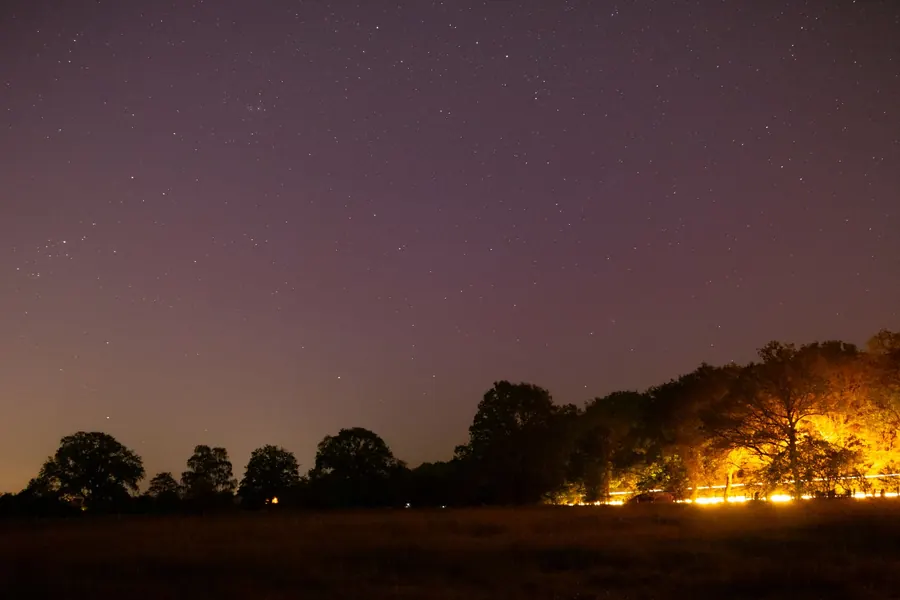
Roughly four fifths of St Albans district is green belt, so a lot of gardens back onto fields, woodland or open parkland: Verulamium Park and the Gorhambury side to the west, Nomansland Common, the farmland around Sandridge and Colney Heath. These are places where it still gets properly dark, and a badly aimed fitting shows up from a long way off. One floodlight on the back of a house can reach a bedroom window several gardens away.
The rule we design by is that light should land on what it is meant to land on and nowhere else. That means fittings with glare shields or narrow beams, uplights angled so the beam stops at the canopy rather than carrying on into the sky, wall lights that point down, and nothing mounted high and tilted outwards. Lower output helps too. Modern LEDs are so efficient that most schemes we draw run at a fraction of the brightness people expect, and the garden still looks lit because the eye adjusts.
There is also a legal backstop. Artificial light from premises can be a statutory nuisance under the Environmental Protection Act 1990, and St Albans City and District Council can investigate complaints and serve an abatement notice if it agrees one exists. The government’s guide to how councils deal with artificial light nuisance explains how that works. A carefully aimed garden scheme is nowhere near that threshold, but a security floodlight on a cheap motion sensor that trips every time a cat walks past can get there.
Bats along the Ver: warm light and wildlife
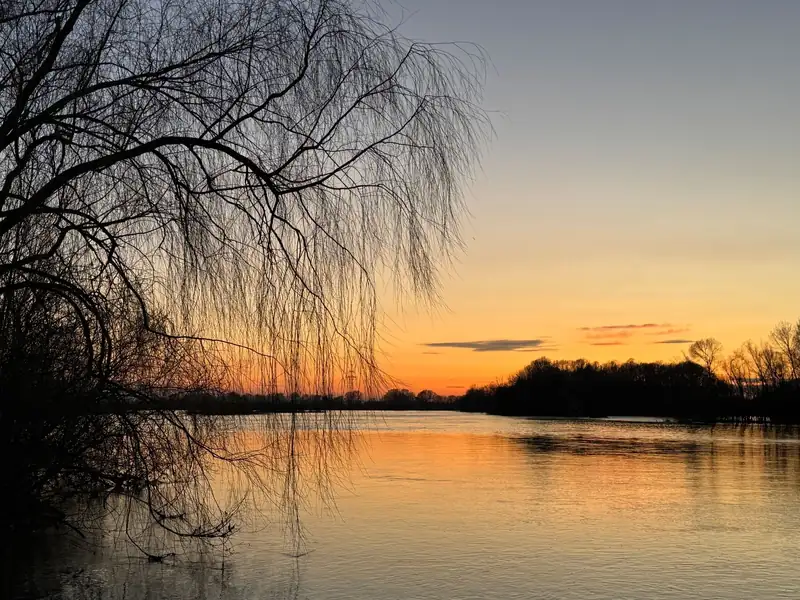
The River Ver is a chalk stream, and chalk streams produce clouds of insects at dusk, which is why the Herts and Middlesex Bat Group runs bat walks through Verulamium Park and regularly records several species feeding over the water. Gardens anywhere near the river, the lakes or the bigger tree lines around the city are likely to have bats commuting through them on summer evenings, and lighting affects them more than most people realise. Slower-flying species tend to avoid lit routes altogether.
The Bat Conservation Trust’s lighting guidance points to the 2023 guidance note it produced with the Institution of Lighting Professionals. For a garden, the useful parts are simple: use LED fittings with no UV output, choose warm white at 2700K or below, keep light pointing down or tightly controlled with nothing above the horizontal, and put security lights on motion sensors with short timers. We apply those to every scheme, not only the ones by the water, because they also happen to be the settings that look best. Cool white at 4000K or more makes planting look grey and a terrace feel like a car park. Warm light flatters brick, stone and foliage.
Keeping one dark side of the garden helps as well. A boundary hedge or the far end of a long plot left unlit gives bats and moths a route through and makes the lit areas look better by contrast.
Controls and zoning: how the lighting is switched

The switching is worth as much thought as the fittings. A single switch that turns on everything at once gets used for dinner parties and very little else. Split the garden into zones instead, so the terrace, the steps and paths, the trees and the far end can each go on independently. Having two or three zones is enough for most gardens. Each zone usually means its own transformer output or circuit, so the zoning has to be decided at the cable-plan stage as well, which is one more reason to do this on paper first.
For control, the options run from a plain switch inside the back door, through a timer or dusk sensor on the transformer, to smart controllers you can run from a phone or a home system. Our usual default is the dull one: path and step lighting on a dusk-to-late timer, so the route to the bins or the garden room is lit without anyone thinking about it, and the decorative zones on a switch by the kitchen door. Dimming is the other thing we would always include. A tree that looks right at full output in January can look overdone on a soft July evening.
What garden lighting costs in St Albans

These are typical ranges for 2026, supplied and installed as part of a wider garden build, with the cables run while the ground is open. On a small courtyard or terrace garden behind a city-centre terrace, eight to twelve low-voltage fittings with one or two zones tends to come to £2,000 to £4,500. A semi’s garden with path and step lighting, two or three uplit trees, some wall washing and a zoned controller usually lands between £4,000 and £9,000. Large plots towards Harpenden or the edge of the city, with a mains feed down the garden, a garden building and several transformers, start around £12,000 and can climb well past that. Those figures sit inside the build bands we gave in our St Albans garden build costs breakdown, rather than on top of them.
The ducting itself is cheap: the expensive part of retrofitting is the disruption. If budget forces a choice, lay every duct and cable now and add fittings later, which is the order we set out in our guide to phasing a garden build. Fittings vary hugely in price, and it is worth paying for solid brass, copper or marine-grade stainless near the house where they are seen and touched, and using simpler fittings hidden in planting where only the light is visible. Running costs are small. A scheme of fifteen 3W LEDs on for five hours a night uses well under a kilowatt-hour.
Common questions
When should garden lighting be planned in a St Albans garden build?
At the design stage, alongside levels and drainage, and before any hard landscaping starts. Cable routes and ducts need to go in while the ground is open, so the positions of fittings, transformers and zones should be on the drawings before the groundworks begin.
Do I need an electrician for 12V garden lighting?
A plug-in low-voltage kit with its transformer on an existing outdoor socket can be fitted without one. A designed scheme usually needs a new circuit from the consumer unit, which is notifiable under Part P, so a registered electrician should install and certify the mains side even when the fittings themselves run at 12V.
What colour temperature is best for garden lighting near wildlife?
Warm white at 2700K or below. Bat Conservation Trust and Institution of Lighting Professionals guidance recommends warm, UV-free LED light, kept low and pointing down, with security lights on short motion-sensor timers. It is also the colour that makes brick, stone and planting look their best at night.
Can garden lighting cause a problem with neighbours in St Albans?
It can if it is badly aimed. Artificial light from premises can be a statutory nuisance, and St Albans City and District Council can investigate complaints. Shielded fittings, low output, beams kept within your own boundary and no high, outward-tilted floodlights keep a scheme well clear of that.