
Choosing Paving For A St Albans Garden: Stone, Porcelain, Brick Or Gravel?
Superior Garden Design St Albans
In February, when the borders have been cut back and the lawn is more mud than grass, the paving is most of what you see from the kitchen window. So choose it slowly. Paving for a St Albans garden is also the biggest single line on most of our build budgets, often 30 to 45 per cent of the hard landscaping, and it is the hardest thing to change later. A border can be replanted in a weekend, whereas a terrace you have fallen out with stays there for twenty years. The district gives you a lot to work with: Victorian yellow and red stock brick near the station and through Fleetville, 1930s semis in Marshalswick and Chiswell Green, bigger plots on the Harpenden side, and under all of it either sticky clay-with-flints or chalk, depending on where you stand. Each of those nudges the choice a different way. Below is how we choose, material by material, with rough 2026 prices supplied and laid.
Start with the house in St Albans, not the paving catalogue
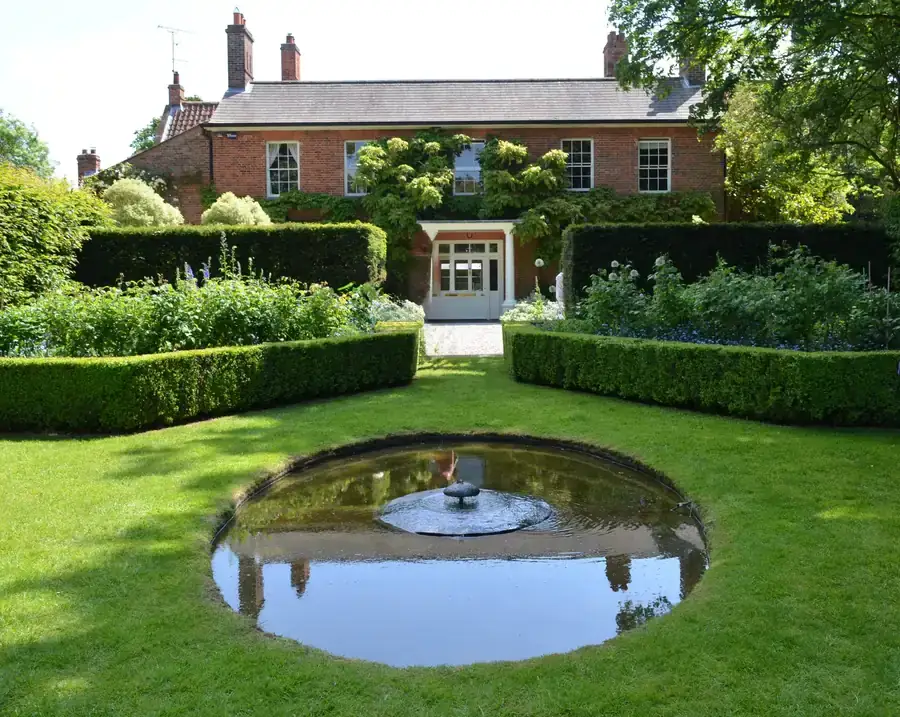
Before anyone opens a sample box, we stand at the back door and look at the brick. The paving sits right up against the house, so the house sets the palette. A London stock terrace with soft yellow brick and stone sills wants something warm and slightly irregular. A red-brick 1930s semi with a pebbledash upper storey tends to look calmer with a buff or grey stone and a brick detail picked out at the edges. A recent rear extension in render and aluminium doors opens the door to cooler, crisper finishes. If you ignore all this and choose from a showroom, you can end up with a terrace that is handsome on its own but looks dropped in from somewhere else.
Plot size matters nearly as much. In a five-metre-wide terrace garden, one material used everywhere usually works better than three, because the eye has so little distance to travel. On the bigger plots towards Harpenden, where the terrace might be 60 square metres and the garden runs on for another 40 metres, there is room to change material as you move away from the house: stone by the doors, brick for the paths, gravel further out. That kind of grading is a large part of the garden landscaping work we design, and it is easier to get right on paper than with a pile of pallets on the drive.
Natural stone: York stone, sandstone and limestone
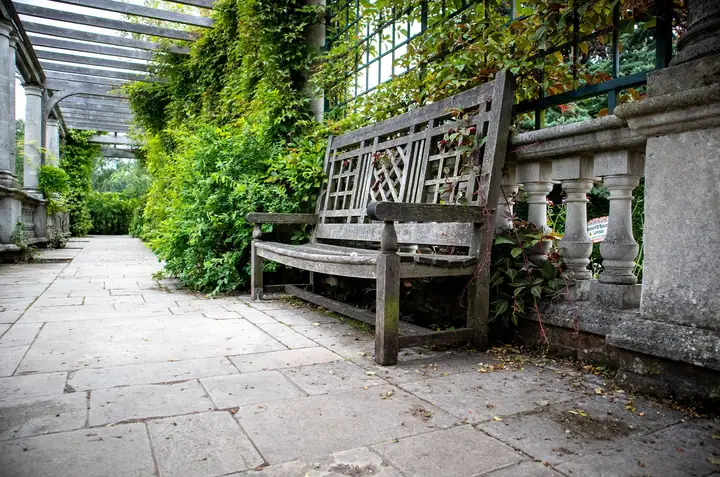
York stone is the benchmark, and it is worth the money. It is a dense sandstone quarried in the Pennines, it greys and softens with age rather than fading, and reclaimed flags turn up in many of the older gardens around Holywell Hill and Fishpool Street. New sawn York stone costs roughly £280 to £400 per square metre laid. Reclaimed can be more, and quality varies hugely from yard to yard, so we always ask to see a whole pallet rather than the best three slabs on top.
Imported sandstone, mostly from India, is the budget stone most people know. It costs roughly £150 to £220 laid and comes in riven (split, with a rippled face) or sawn (smooth, with crisp edges). The colours range widely between batches, and some of the warmer grades carry iron that can bleed rust-coloured spots after a wet winter. Our habit is to specify the named grade and the quarry source, and to lay out a few slabs dry on site before anything gets bedded. If the delivery doesn’t match the sample, that is the moment to send it back.
Limestone is the quieter option, usually grey-blue or buff, smooth and even in tone. It looks very good with contemporary extensions and painted brick, and costs roughly £170 to £260 laid. Its weakness is chemistry. Lemon juice, red wine and some patio cleaners will etch the surface, so we steer clients away from it under a barbecue or an outdoor kitchen and towards it where the terrace is mainly for sitting.
Porcelain: what it is good at, and where it goes wrong
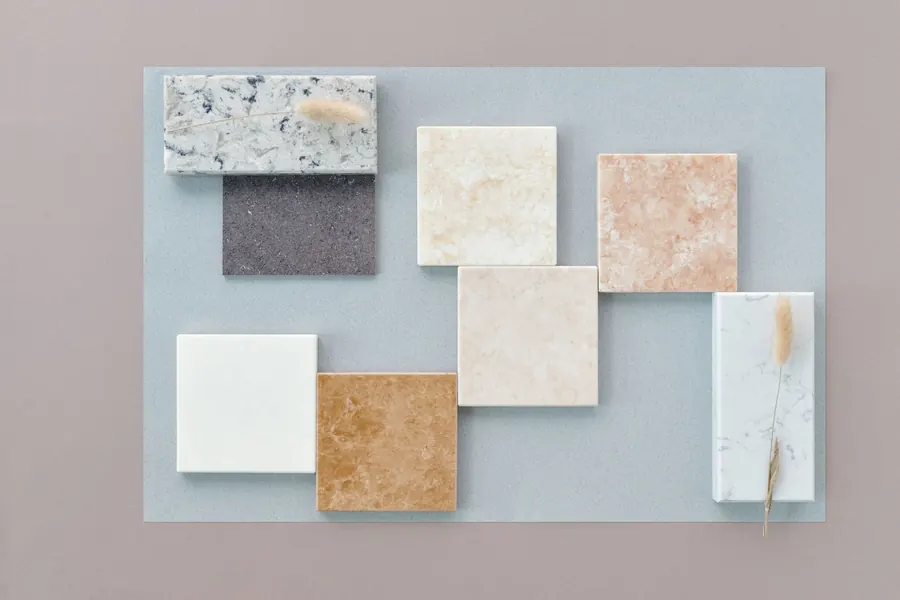
Outdoor porcelain is fired clay pressed into 20mm slabs. It absorbs almost no water, so frost has nothing to work on and spills wipe away. Expect roughly £200 to £300 per square metre laid. The finish can mimic stone, timber or concrete, and the better ranges carry a slip rating (look for R11 for outdoor use) that matters on the north-facing terraces that stay damp most of the winter in this part of Hertfordshire.
There are two catches. Because porcelain is so dense, ordinary mortar doesn’t grip it, so each slab needs a bonding primer painted on the back before it goes down onto a full mortar bed. Miss that step and slabs start to rock within a couple of years, and in our experience it is the single most common fault we see when we’re asked to look at a patio someone else laid. The other catch is visual. A very uniform, light grey porcelain in big 900 by 600 slabs can look stark against old brick. Darker, textured, more varied tones settle in better, and a strip of brick or gravel between the house wall and the porcelain helps the two meet without clashing.
Clay brick and pavers: the period-house default
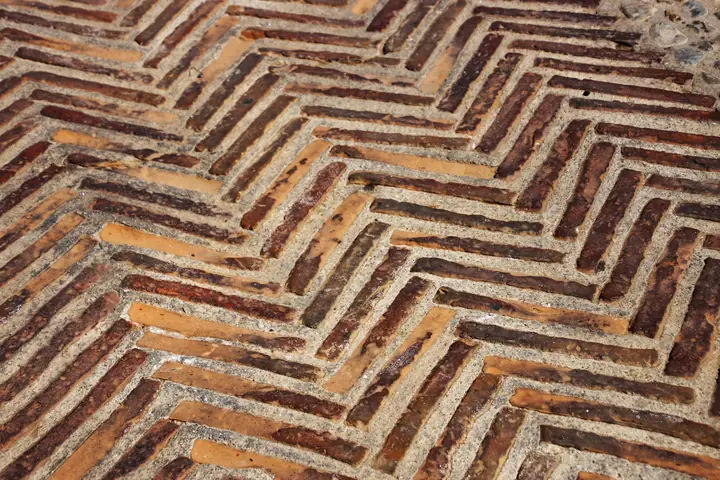
Clay pavers are the material we reach for most often on period properties, because they are made of the same stuff as the house. Expect roughly £160 to £240 per square metre laid, depending on the paver and the pattern. Herringbone uses more cutting and looks busier. Stretcher bond, laid across the line of a path, makes a narrow garden feel wider. Basket weave suits a small courtyard. Check the paver is a proper frost-resistant clay paver to BS EN 1344 rather than a facing brick laid flat. Facing bricks are made for walls, and on the ground they soak up water and can flake apart after a few hard frosts.
Brick also works hard as a supporting material. A single course of brick on edge makes a crisp lawn trim. A brick band round a stone terrace pulls a newer surface back towards the house. On a 1930s semi, picking up the red of the house in a brick edge often solves the “it looks new” problem without spending more on the main slabs. If your house is older than about 1914, our notes on garden design for period homes in St Albans cover how brick, flint and lime mortar fit together in more detail.
Gravel and self-binding gravel
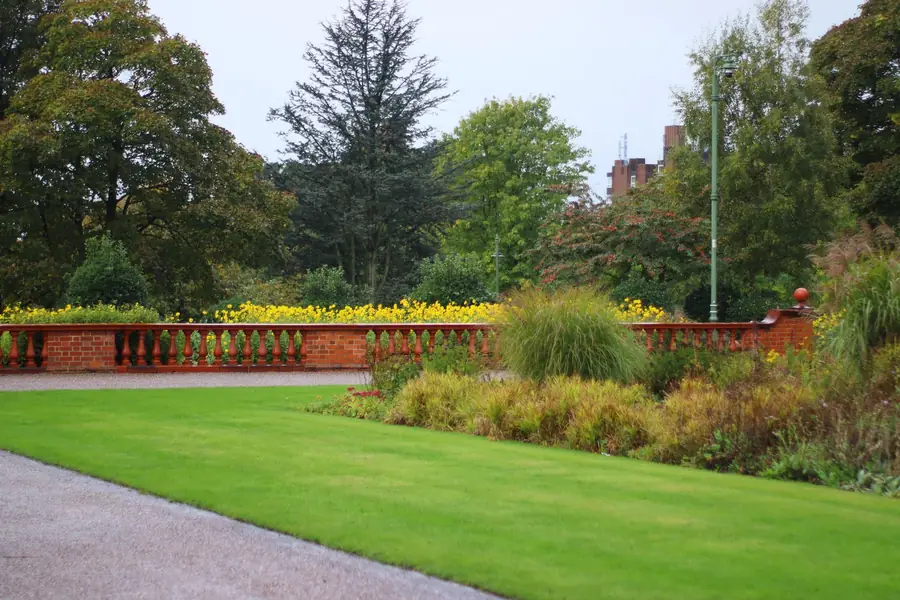
Gravel is the cheapest surface to lay well, at roughly £50 to £90 per square metre with a membrane, a compacted base and proper edging. It drains freely, it sounds good underfoot, which is a small security bonus at the side of a house, and it lets you plant straight into it. Use an angular stone around 10 to 20mm, because round pea shingle rolls and moves under your feet. A local-looking flint or buff gravel sits comfortably in Hertfordshire, where flint is in every old wall.
Self-binding gravel is a fine aggregate with clay and dust in it that locks together when it is rolled, giving a firm, path-like surface that still lets water through. It costs roughly £80 to £130 laid and suits long paths on the bigger plots, the kind that run past an orchard or a meadow edge. It is less suited to a spot right outside the back door, though, because the fines get walked indoors on wet shoes, and it doesn’t like steep slopes where rain can carve channels through it. For the terrace you live on every day, slabs still win.
What sits underneath: clay, chalk, frost and the laying bed
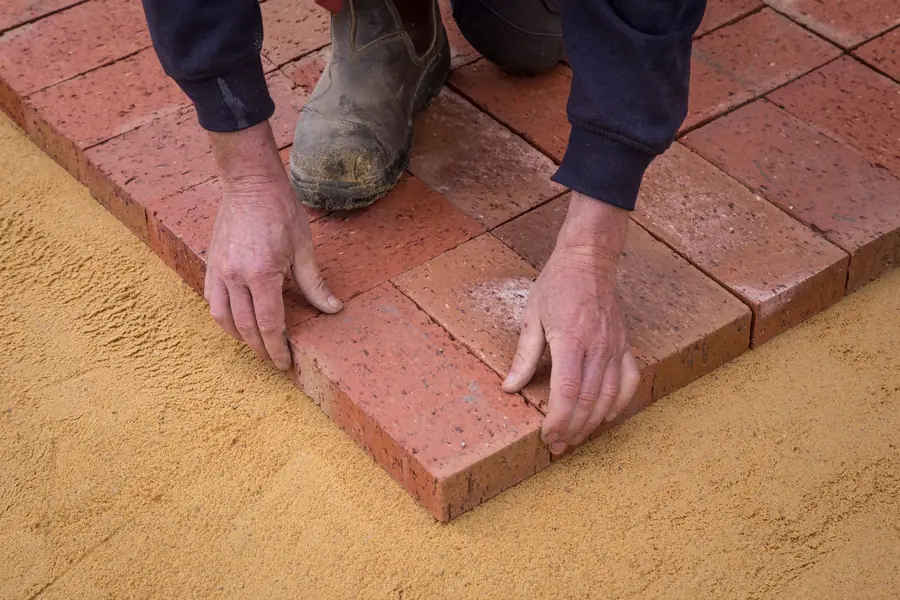
The slab you choose matters less than what goes under it. St Albans sits mostly on clay-with-flints over chalk, and the two behave very differently in winter. Clay holds water, swells and shrinks with the seasons, and turns a soft spot under a terrace into a hollow by spring. Chalk drains well but is itself frost-susceptible near the surface, so a shallow base over chalk can lift in a hard cold snap. On either ground the answer is the same: dig out the topsoil completely and lay around 150mm of compacted crushed stone sub-base, more on soft clay, then bed every slab on a full bed of mortar rather than five blobs at the corners. Dot-and-dab bedding leaves voids where water collects, freezes and pushes. Clay and concrete block pavers are the exception: they go down on a screeded bed of sharp sand with kiln-dried sand brushed into the joints, which holds up well for years provided the edges are properly restrained.
Water has to go somewhere, too. Paving should fall away from the house at about 1 in 60 and finish at least 150mm below the damp proof course, and on clay it should drain into a channel, a gravel strip or a planted border rather than onto the neighbour’s lawn. In the front garden there is also a rule to know. Since 1 October 2008, covering more than 5 square metres of a house’s front garden with a hard surface that sheds water onto the road needs planning permission, unless the surface is permeable or the water runs into a lawn or border within the plot. The government’s guidance on permeable surfacing of front gardens sets out the options, and the Planning Portal’s front garden paving page gives the short version. Permeable block paving, gravel and self-binding gravel all get you there. For anything unusual at a specific address, St Albans City and District Council’s planning pages are the place to check, and that council covers Harpenden as well as the city.
How we specify paving, and what it adds up to
A paving specification from a designer is more than a product name. Ours lists the exact stone or porcelain range and colour, the slab sizes and laying pattern, joint width and jointing material, the sub-base depth for that particular ground, the bedding mix, the falls and where the water goes, and the edge details where paving meets lawn, wall or border. Drawn plans show the setting-out so the joints line up with doors and steps rather than ending in a sliver of cut slab against the house. With a spec like that, two landscapers can price the same job and you can compare like with like.
As a rough guide for 2026, a 30 square metre terrace in Indian sandstone comes in around £4,500 to £6,600 laid, porcelain £6,000 to £9,000, and new York stone £8,400 to £12,000, before steps, walls or drainage runs. Our breakdown of what a garden redesign and build costs in St Albans puts those numbers in the context of a whole garden. Before signing anything off, ask to see the samples wet. Hose a slab down, or look at it after rain. Plenty of sandstones that look buff and gentle when dry go a good deal darker and browner when wet, and in a St Albans winter they will be wet for months at a time.
Common questions
What is the best paving for a Victorian terrace garden in St Albans?
Clay pavers, reclaimed York stone or a riven sandstone in a warm, muted colour are the safest choices, because they sit comfortably beside old stock brick. Porcelain can work too if you choose a darker, textured finish and separate it from the house wall with a band of brick or gravel.
Does porcelain paving survive frost on St Albans clay?
The porcelain itself is effectively frost-proof because it absorbs almost no water. Problems come from the ground and the bedding: on clay you need a deep, well-compacted sub-base, a full mortar bed and a bonding primer on the back of every slab, otherwise slabs can lift or rock after a wet winter.
Do I need planning permission to pave my front garden in St Albans?
Only if you cover more than 5 square metres with an impermeable surface that drains towards the road. Permeable paving, gravel and self-binding gravel do not need permission, and neither does a solid surface that drains into a lawn or border inside your own garden. St Albans City and District Council handles planning for both St Albans and Harpenden.