
Harpenden Common
Look at where the gorse grows and where the grass stays green in August. The common is a quick lesson in the plateau's drier, more acid patches.
Learn more about Harpenden CommonHarpenden is an awkward town for a planting designer in the most interesting way. Our planting design work here has to start with a spade, because a garden off West Common and a garden in Batford can sit on soils that would argue with each other: flinty, faintly acid clay up on the plateau, shallow alkaline chalk down by the Lea. Add the dry, rooty shade under a century-old lime, and a plant list copied from a magazine stands very little chance. We write schemes for the ground in front of us.
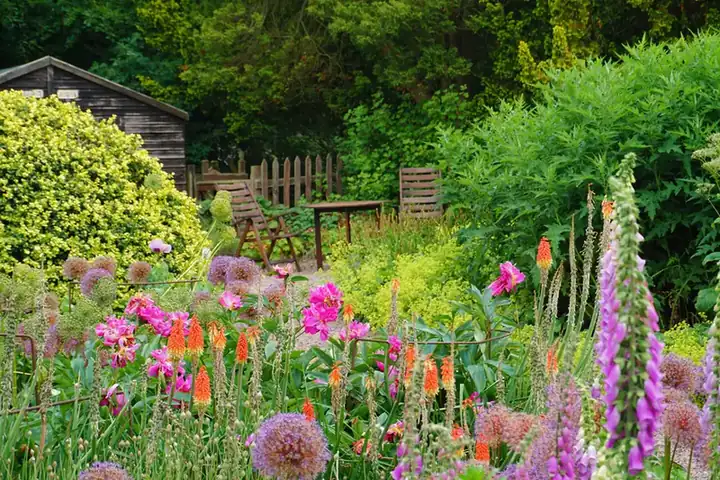
A few details about the garden is all we need - we will be in touch to arrange a time to come and see it. No charge for the visit and no hard sell afterwards.
The Business Behind It
Suppliers kept on good terms.
Plants for a Harpenden scheme come through suppliers Mark keeps on good terms with. He puts time into those relationships because they help with rates and with how quickly stock can be delivered.
Planting days near East Common or West Common are planned the evening before, like every other day of a project. Albert answers the phone in the meantime, if you want to check on a delivery or a date.
Harpenden
We test pH and texture across the garden, not at a single point, because plateau clay and chalk can meet within one long plot. Each bed then gets plants suited to its own soil rather than an average.
Dry shade under big trees defeats most border plants. We use the short list that thrives there - epimedium, Geranium macrorrhizum, Brunnera, ferns such as Dryopteris - and plant them in drifts large enough to read from the house.
In a long garden we arrange planting so something is always flowering a little further on. Colour moves down the plot through the season, and the walk to the end becomes a habit rather than an expedition.
The plateau clay is hard work in a wet April but holds moisture and nutrients that chalk gardens envy. Roses, asters, persicaria and big grasses grow strongly in it once the beds are well prepared.
Batford gardens suit scabious, salvias, origanum, knapweed and the silver-leaved plants that like sharp drainage. Planted generously, they echo the chalk grassland the valley would grow if left alone.
Clipped yew, box alternatives, multi-stem trees and grasses left standing give the garden shape between November and March, which matters when that long view from the kitchen is what you see most of the winter.
Before You Choose
A good planting designer will want to know where your garden sits before suggesting a single plant, and should be slightly suspicious of any assumption based on the address. The divide between the clay-with-flints plateau and the chalk of the Lea valley is real but untidy; we have found both within one Harpenden garden. Expect soil tests in several places, a note of where water lies after rain, and questions about which parts get afternoon sun once the trees are in leaf.
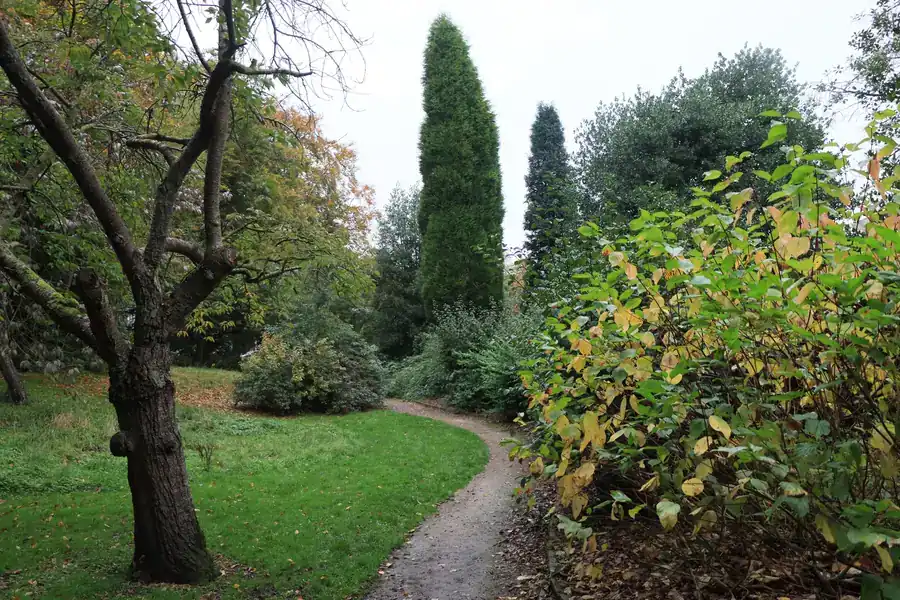
Ask how the designer handles the trees. Under a mature canopy, the trouble is rarely shade alone; it is dry, root-filled soil that the tree empties every summer. Someone experienced will talk about planting small, plug-sized plants between roots rather than digging large holes, mulching heavily and watering through the first two summers. Someone less experienced will specify hostas and hope.
Finally, look at how the drawings treat the whole length of the garden. A planting plan for a long Harpenden plot should show how the borders work as a sequence, what flowers in May near the house and what holds attention at the far end in September. If the plan is a single border drawn in detail with the rest marked 'existing', it is decoration rather than design.
Compared
Most of the borders we inherit in the town were planted by one of the two methods on the right. They are not wrong, just blind to which soil they were going into.
| Designed scheme for your soil | Garden-centre plants bought by eye | Replanting what was there before | |
|---|---|---|---|
| Plateau clay or chalk | Plants chosen after testing each bed | Chosen by label photo, soil ignored | Repeats whatever survived last time |
| Under the big trees | Proven dry-shade species planted as plugs | Sun-lovers that stretch and fail | Bare soil or ivy, again |
| Pull toward the far end | Flowering sequence planned down the garden | Colour clustered near the house | Whatever the old layout allowed |
| Winter shape | Evergreens, stems and grasses placed deliberately | Mostly bare from November | Depends on the previous owner's taste |
| First two summers | Watering and aftercare plan supplied | Losses in the first dry spell | Mixed results, hard to diagnose |
| After five years | Filled in, divided and still coherent | Gaps patched with whatever is on offer | The same tired border, older |
Our Process
Our planting commissions in the town run through the same seven stages as a full build. The soil tests and a note of summer shade under the trees shape everything we draw.
We walk the garden with you and listen more than we talk. Then the measuring starts: levels, orientation, drainage behaviour, existing trees worth keeping, and test pits to find out what soil you genuinely have rather than what the area is assumed to have.
A scaled masterplan showing the whole garden - spaces, routes, levels, structures and planting zones - with mood imagery for materials and atmosphere. This is where you react, argue and change things. Far cheaper to move a terrace on paper than in stone.
The agreed concept is developed into construction drawings and a species-by-species planting plan: setting-out dimensions, wall and step details, levels, lighting positions, and every plant named with its quantity and pot size.
Because the design is fully drawn, the build can be priced properly - each element itemised, so if the figure needs trimming you choose what changes rather than watching quality quietly disappear from everything.
Groundworks, drainage, terracing, walls, steps and structures, built off the drawings by our own landscaping team. Setting-out is checked against the plan, and sub-bases and falls are treated as the point of the job, not the boring bit before the paving.
Beds are decompacted and improved before a single plant goes in - on this area's clay-with-flints and chalk that preparation decides whether a border establishes or sulks. Then the planting plan is set out on the ground, adjusted by eye, and planted.
We walk the finished garden with you, hand over the plans, plant list and care calendar, and come back during the first season - because a designed garden is at its most vulnerable in its first year, not its first week.
Detail
People walk toward colour and movement almost without thinking, and a long garden can make use of that. We plan borders so that the strongest flowering moves away from the house as the year goes on - bulbs and early perennials near the terrace in spring, a run of salvias and grasses halfway down in high summer, asters and late seedheads at the far end in autumn. By September you find yourself at the bottom of the garden simply because that is where the interest has gone.
That only works if the paths and seating are in the right places, so planting and layout are drawn together. If the structure of the garden needs rethinking as well as the beds, our garden landscaping in Harpenden deals with terraces, paths and building near protected trees. Rothamsted, on the western edge of town, has been measuring what grows in the same Hertfordshire ground since the 1840s; we take a more modest view, but the principle that soil comes first is the same.
Reassurance
Budget
£4,000 – £20,000
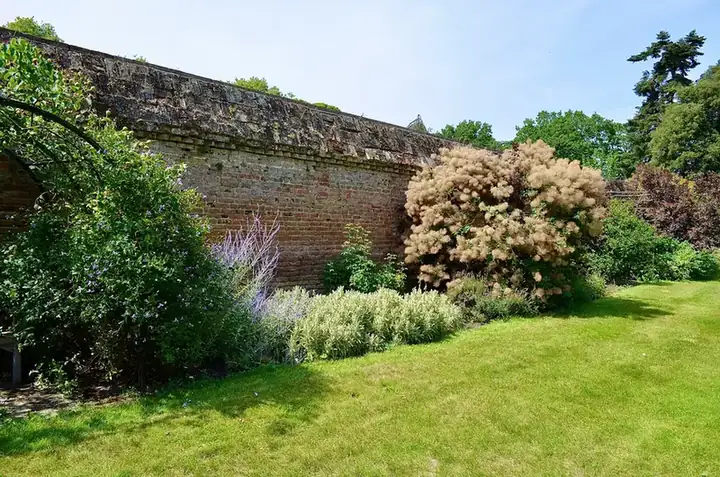
Planting-only commissions in Harpenden sit within this band. The size of the borders, how much soil preparation they need and whether you want instant height or are happy to wait a season or two decide where a particular garden falls.
A garden backing onto East Common may have sixty metres of border once both sides are counted. Planting density stays the same whatever the length, so area is the main driver of plant numbers.
Plateau clay often needs decompacting and opening up with grit and compost; shallow chalk around Batford needs organic matter worked in to hold any moisture. Both are labour we price separately and clearly.
Planting around root plates on The Avenues is slow, careful hand work with smaller plants, extra mulch and an irrigation plan for two summers. It costs more per metre than an open sunny bed.
The Area
Each of these places shows something about how plants behave on the local ground. We often point clients to them before a design meeting.
Look at where the gorse grows and where the grass stays green in August. The common is a quick lesson in the plateau's drier, more acid patches.
Learn more about Harpenden CommonThe estate is home to the world's longest-running agricultural experiments, which makes it the most thoroughly studied soil in town and a quiet argument for testing before planting.
Learn more about Rothamsted EstateChalk-fed springs and water meadows by the Lea show the other face of Harpenden ground, with plants suited to moving water and alkaline conditions.
Learn more about Batford SpringsQuestions
Feedback
Rated 5 out of 5
“We had lived with a sloping, unusable lawn in Batchwood for eleven years and assumed it was just what the garden was. The masterplan split it into three levels with a long bench built into the top retaining wall, and we now eat outside from April to October. The bit that impressed me most was the drainage they insisted on putting behind the walls - invisible, and clearly the reason nothing has moved.”
Rated 5 out of 5
“The house was rebuilt two years ago and the garden never caught up - a builder's lawn and a patio that faced the wrong way. They redesigned the whole plot around the new kitchen's sightlines and put in planting with real maturity. Neighbours assume the garden came with the rebuild, which I think is the point.”
Rated 5 out of 5
“What we wanted was borders like the ones you see at proper gardens, and what we had was clay you could throw pots with. The planting plan came with every species named and a paragraph on why it would cope with our soil. Two summers in, the border is better than the photographs they showed us at concept stage.”
Rated 5 out of 5
“An outdoor kitchen was my husband's idea and I was sceptical it would ever be used. Because the gas, power and lighting all went in before the paving, it looks built-in rather than bolted on, and we cooked outside more or less every weekend last summer. The festoon lighting on the pergola was their suggestion and it makes the whole thing at night.”
Rated 5 out of 5
“A proper process from start to finish. Survey with test pits, a concept we pushed back on twice without any sulking, then a build crew who turned up when they said and swept the drive every evening. The care calendar they left us is pinned inside the shed door and actually gets used.”
Coverage
Alongside Harpenden we write planting schemes for gardens in Wheathampstead, St Albans, Welwyn, Hemel Hempstead, Berkhamsted, Chorleywood, Rickmansworth, Watford and Radlett.
Send us a note about your Harpenden garden and the trouble spots in it. We will come and test the soil before we suggest a single plant.