
Berkhamsted Castle
Grass and wild flowers on old earthworks show how chalk slopes look when left to grow naturally - a useful reference for planting a steep bank.
Learn more about Berkhamsted CastlePlanting design in Berkhamsted has three surfaces to deal with that flat gardens never ask about: the bank, the wall face and the narrow bed along the top of each terrace. Each one dries at a different rate and gets different light. Underneath sits one of two soils, thin chalk on the Bulbourne valley floor or clay-with-flints higher up toward Berkhamsted Common and Ashridge. We map both the surfaces and the soil before choosing plants, then pick species that root into the slope and hold it in place.
A few details about the garden is all we need - we will be in touch to arrange a time to come and see it. No charge for the visit and no hard sell afterwards.
The Business Behind It
Suppliers kept on good terms.
Banks and borders on Berkhamsted's chalk and clay-with-flints need the right plants in the ground at the right time. Mark works hard at his supplier relationships, and being on good terms with them helps on cost and on delivery times for your scheme.
He also plans each planting day in writing the evening before. If you need to check on progress, Albert is in the office and always available on the phone.
Berkhamsted
Groundcover planted densely on a slope binds the surface and slows run-off. We use spreading shrubs and perennials planted through biodegradable matting on steeper banks, so the soil stays put while they establish.
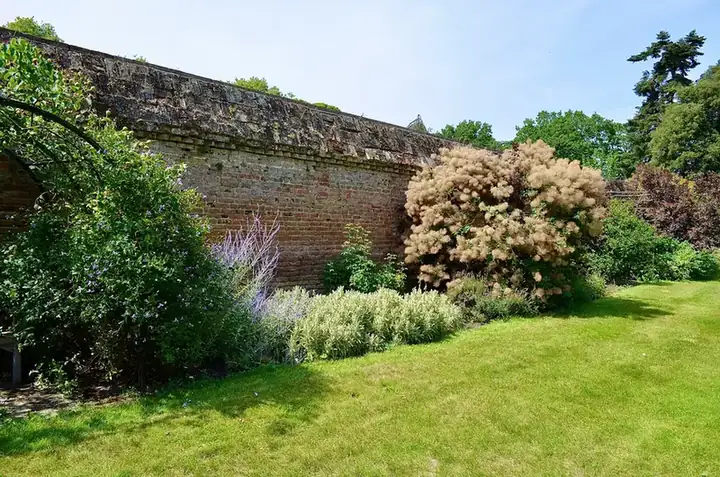
Retaining walls built with planting pockets take Erigeron, thyme, Aubrieta and small campanulas. On chalk they settle in quickly and soften new masonry within a season or two.
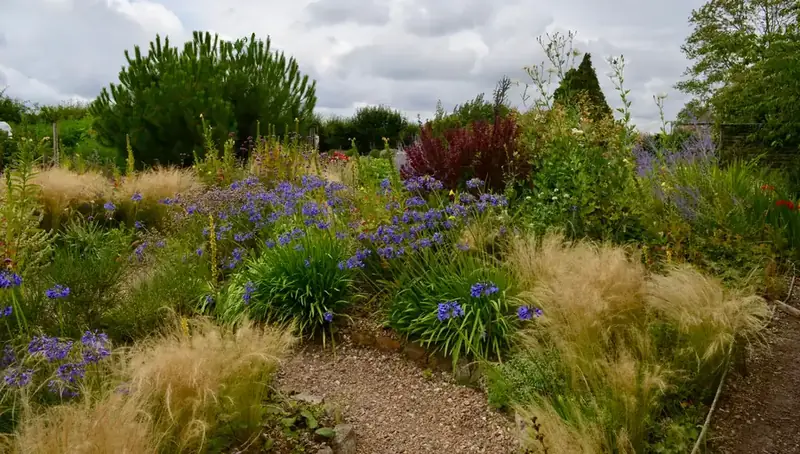
Lower gardens suit lavender, salvia, cistus, iris and scabious, plants that like sharp drainage and alkaline soil. We plant them generously so the beds read clearly from the terrace above.
Toward the Common the soil holds more moisture and can be less alkaline. Foxgloves, ferns, hydrangeas and woodland perennials grow well there, much as they do under Ashridge's beeches.
Wisteria grows exceptionally well on Berkhamsted chalk. Trained on wires along a south-facing terrace wall, it turns a structural element into the garden's main feature for late spring.
Beech hedging suits both chalk and clay-with-flints and keeps its copper leaves through winter. It links a garden visually to the beechwoods on the ridge and gives terraces a clear edge.
Before You Choose
Ask how they plant banks. On a slope, holes dug for plants become channels for water and soil can wash out in heavy rain before roots take hold. A designer used to sloping sites will talk about planting density, erosion-control matting, mulch that stays where it is put and planting across the slope rather than straight down it. If the plan treats a bank like a flat bed, expect bare patches.
Ask how they read the soil. Berkhamsted's chalk and clay-with-flints are different enough that a single plant list cannot serve both, and on valley-side plots you can find chalk at the bottom of the garden and clay at the top. You want soil tests at several heights and a plant list that changes with them. A designer who only tests next to the house is testing one soil.
Ask about water and maintenance on each level. Terraces dry from the top and the edges first, and walls reflect heat. A good scheme puts the most drought-tolerant plants at the top of banks and on wall faces, keeps thirstier plants on lower, deeper beds, and gives you safe access to each level for cutting back. Gardens on slopes need a maintenance route as much as a planting plan.
Compared
The slope decides most of the outcome. These are the three treatments we see on Berkhamsted banks and terraces.
| Designed slope planting | Grass left on the bank | Shrubs dotted along the top | |
|---|---|---|---|
| Soil retention | Dense groundcover and matting bind the surface | Thin turf scalds and erodes on chalk | Bare soil between plants washes out |
| Maintenance on the slope | Annual cut-back from planned access points | Mowing at an angle, every week | Weeding a steep bank by hand |
| Dry summers | Drought-tolerant species at the top | Bank browns off by July | Losses on the highest, driest ground |
| Walls and terrace faces | Planting pockets and trained climbers | Not used | Bare masonry |
| Chalk versus clay | Palette changes with height and soil | One grass mix everywhere | Same shrubs top to bottom |
| Look from the house | Layered, with interest on each level | A green wall of lawn | A row of separate shrubs |
Our Process
Our seven-stage process applies here as everywhere. On sloping plots we add soil tests at more than one height, because the palette often has to change between the top and the bottom of the garden.
We walk the garden with you and listen more than we talk. Then the measuring starts: levels, orientation, drainage behaviour, existing trees worth keeping, and test pits to find out what soil you genuinely have rather than what the area is assumed to have.
A scaled masterplan showing the whole garden - spaces, routes, levels, structures and planting zones - with mood imagery for materials and atmosphere. This is where you react, argue and change things. Far cheaper to move a terrace on paper than in stone.
The agreed concept is developed into construction drawings and a species-by-species planting plan: setting-out dimensions, wall and step details, levels, lighting positions, and every plant named with its quantity and pot size.
Because the design is fully drawn, the build can be priced properly - each element itemised, so if the figure needs trimming you choose what changes rather than watching quality quietly disappear from everything.
Groundworks, drainage, terracing, walls, steps and structures, built off the drawings by our own landscaping team. Setting-out is checked against the plan, and sub-bases and falls are treated as the point of the job, not the boring bit before the paving.
Beds are decompacted and improved before a single plant goes in - on this area's clay-with-flints and chalk that preparation decides whether a border establishes or sulks. Then the planting plan is set out on the ground, adjusted by eye, and planted.
We walk the finished garden with you, hand over the plans, plant list and care calendar, and come back during the first season - because a designed garden is at its most vulnerable in its first year, not its first week.
Detail
A retaining wall is the most underused planting surface in a sloping garden. Wire it before the planting goes in, choose its aspect carefully and it will carry wisteria, climbing roses or a trained fruit tree for decades. On chalk, wisteria in particular grows with real vigour; it needs firm pruning twice a year, in summer and winter, and in return covers a south-facing wall with flower each May. Below the wall, a bank of low shrubs and grasses holds the soil and frames the view down the valley.
The beechwoods of Ashridge, on the ridge above the town, are a useful model for the shadier, higher gardens: a canopy, a layer of ferns and woodland perennials, and a spring carpet of bulbs. If the walls and terraces themselves still need to be built or rebuilt, our garden landscaping for Berkhamsted slopes covers the engineering. We draw both together so planting pockets and climbing wires are built in, not drilled in afterwards.
Reassurance
Budget
£4,000 – £20,000
Berkhamsted planting commissions fall within this band. The area of bank to be planted, how steep it is and how many wall faces or climbers are involved make the biggest difference. Access for plants and mulch on stepped gardens is also part of the price.
Steep slopes need erosion matting, denser planting and more careful work, all of which take longer than planting a level bed of the same area. The gradient affects labour more than plant numbers.
Gardens near South Park Gardens and the valley floor need organic matter worked into thin chalk. Plots toward Berkhamsted Common sit on clay-with-flints and need opening up instead. We test and price accordingly.
Around Castle Village and the Boxwell Road area, many gardens can only be reached by steps. Moving trees, mulch and large plants by hand adds time to the planting days.
The Area
The plant life around the town tells you a lot about what will grow in your garden. These three places are a good start.
Grass and wild flowers on old earthworks show how chalk slopes look when left to grow naturally - a useful reference for planting a steep bank.
Learn more about Berkhamsted CastleNational Trust beechwood famous for its May bluebells. Its shady floor is the model for planting under trees on the higher, clay-capped gardens.
Learn more about Ashridge EstateAlong the towpath, wet-ground plants line the water's edge. They show what suits the lowest, dampest spots on the valley floor.
Learn more about Grand Union CanalQuestions
Feedback
Rated 5 out of 5
“We had lived with a sloping, unusable lawn in Batchwood for eleven years and assumed it was just what the garden was. The masterplan split it into three levels with a long bench built into the top retaining wall, and we now eat outside from April to October. The bit that impressed me most was the drainage they insisted on putting behind the walls - invisible, and clearly the reason nothing has moved.”
Rated 5 out of 5
“The house was rebuilt two years ago and the garden never caught up - a builder's lawn and a patio that faced the wrong way. They redesigned the whole plot around the new kitchen's sightlines and put in planting with real maturity. Neighbours assume the garden came with the rebuild, which I think is the point.”
Rated 5 out of 5
“What we wanted was borders like the ones you see at proper gardens, and what we had was clay you could throw pots with. The planting plan came with every species named and a paragraph on why it would cope with our soil. Two summers in, the border is better than the photographs they showed us at concept stage.”
Rated 5 out of 5
“An outdoor kitchen was my husband's idea and I was sceptical it would ever be used. Because the gas, power and lighting all went in before the paving, it looks built-in rather than bolted on, and we cooked outside more or less every weekend last summer. The festoon lighting on the pergola was their suggestion and it makes the whole thing at night.”
Rated 5 out of 5
“A proper process from start to finish. Survey with test pits, a concept we pushed back on twice without any sulking, then a build crew who turned up when they said and swept the drive every evening. The care calendar they left us is pinned inside the shed door and actually gets used.”
Coverage
Our planting designers also work in Hemel Hempstead next door, and in Wheathampstead, Welwyn, Harpenden, St Albans, Radlett, Watford, Chorleywood and Rickmansworth.
Tell us about the banks and walls in your Berkhamsted garden. We will visit, test the soil at each level and suggest a planting scheme.