
Cassiobury Park
Formal gardens, old estate trees and watercress beds on the Gade, across 190 acres. Note which trees cast real shade and which let light through. It matters at home.
Learn more about Cassiobury ParkPlanting design in Watford has a scale problem. The gardens are town-sized. The trees are estate-sized. Put a big cedar or plane next to a narrow border on quick-draining gravel and most plants give up by August. Our planting plans start with the structure: evergreens that keep a small garden in shape through winter, then perennials and bulbs that cope with dry soil, root competition and shade. The aim is simple. A Watford garden that looks deliberate in January, not just June.
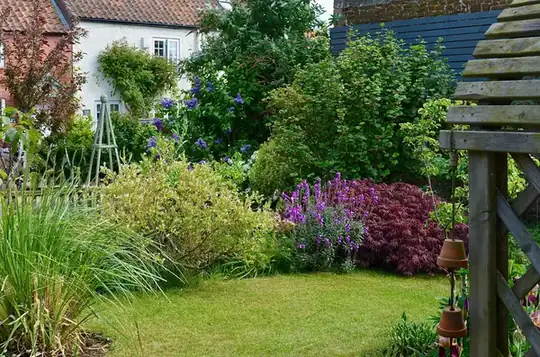
A few details about the garden is all we need - we will be in touch to arrange a time to come and see it. No charge for the visit and no hard sell afterwards.
The Business Behind It
Suppliers kept on good terms.
Mark values his suppliers and puts in the effort to stay on good terms with them. For a Watford planting scheme, that helps with the rates you pay and with how promptly plants are delivered.
Planting days are planned and written down the night before, the same as every other stage. Albert, in the office, is available on the phone if anything about the scheme needs discussing.
Watford
Small gardens have nowhere to hide in January. Yew, Ilex crenata, pittosporum and evergreen grasses give the borders shape when everything else has died back. They also hide the fence, which is half the battle.
Gravel over chalk drains fast and holds little food. We choose plants that tolerate it, and add organic matter where the border needs more body, so it grows rather than sits.
Under Cassiobury cedars or Nascot planes, roots take most of the water. Shade-tolerant, drought-tough plants hold the ground there. Thirsty ones are kept well away. Bulbs fill the spring gap before the shade thickens.
Nascot gardens tend to be long and slim. We use height, with climbers, pleached trees and tall grasses, so the planting fills the vertical space without crowding the path. It also screens the neighbours' windows, which in Nascot are usually close.
Cassiobury gardens often run wide. Deep borders at the sides, with height at the back and lower planting to the front, give that width some depth. The lawn shrinks a little. Nobody misses it.
Most Watford clients want a garden, not a part-time job. We agree the time you can give it and design to that. No high-maintenance prima donnas unless you ask. The plan says roughly how many hours a month it needs.
Before You Choose
Ask what your garden looks like in February. Every border looks good in June. A Watford plot is small enough that a bare winter shows from the kitchen window, so the plan needs evergreen structure, winter stems and seed heads. If the designer only shows summer photos, that's your answer. Politely thank them and keep looking. Winter is when a small garden gets judged.
Ask how they'll plant around your trees. A big cedar or plane takes water and light from everything nearby. A sensible designer checks for preservation orders, keeps digging gentle around roots and chooses plants that cope with dry shade. One who suggests replacing the tree with "something more manageable" hasn't checked the conservation area rules. Felling a protected cedar is not a gardening decision, and the council will say so.
Ask how they handle the shape of your plot. Nascot gardens are often long and narrow, and Cassiobury plots can be wide but shallow. The planting needs to work with that shape, not against it. A designer who uses the same layout for both hasn't really looked at your garden. Pace it out with them. Then watch. A good one will be counting metres from the first minute, and asking where the sun sits at teatime.
Compared
Small gardens show every choice. Here's how a designed scheme compares with the usual alternatives.
| Designed scheme with year-round structure | Summer colour from the garden centre | Low-maintenance gravel and pots | |
|---|---|---|---|
| January | Evergreen shapes, stems and seed heads | Bare soil and labels | Gravel and empty pots |
| Under big trees | Dry-shade plants matched to the roots | Wilts by midsummer | Pots dry out daily |
| On mixed ground | Matched plants in improved beds | Thirsty plants that flag by July | Membrane and gravel over thin soil |
| Narrow Nascot plots | Height and climbers save floor space | Plants crowd the path | Feels like a yard |
| Wide Cassiobury plots | Deep side borders add depth | Thin strips along the fence | Lots of gravel, little life |
| Upkeep | Agreed hours, set out in the plan | Constant replacing | Low, until weeds appear |
Our Process
In Watford the survey spends as long looking up as looking down. The trees above often decide more than the soil below.
We walk the garden with you and listen more than we talk. Then the measuring starts: levels, orientation, drainage behaviour, existing trees worth keeping, and test pits to find out what soil you genuinely have rather than what the area is assumed to have.
A scaled masterplan showing the whole garden - spaces, routes, levels, structures and planting zones - with mood imagery for materials and atmosphere. This is where you react, argue and change things. Far cheaper to move a terrace on paper than in stone.
The agreed concept is developed into construction drawings and a species-by-species planting plan: setting-out dimensions, wall and step details, levels, lighting positions, and every plant named with its quantity and pot size.
Because the design is fully drawn, the build can be priced properly - each element itemised, so if the figure needs trimming you choose what changes rather than watching quality quietly disappear from everything.
Groundworks, drainage, terracing, walls, steps and structures, built off the drawings by our own landscaping team. Setting-out is checked against the plan, and sub-bases and falls are treated as the point of the job, not the boring bit before the paving.
Beds are decompacted and improved before a single plant goes in - on this area's clay-with-flints and chalk that preparation decides whether a border establishes or sulks. Then the planting plan is set out on the ground, adjusted by eye, and planted.
We walk the finished garden with you, hand over the plans, plant list and care calendar, and come back during the first season - because a designed garden is at its most vulnerable in its first year, not its first week.
Detail
The Cassiobury estate left Watford with a lot of very large trees in fairly ordinary back gardens. They're wonderful. They're also greedy. A cedar's roots spread wide and dry the soil, and the canopy blocks light for most of the day. We plant the ground beneath with tough, shade-tolerant perennials, ferns and bulbs that flower before the shade gets too deep. Further out, in more light, the border can open up with roses, asters and grasses where the soil has more body.
For inspiration, Cheslyn House & Gardens in Nascot Wood is hard to beat: woodland planting and herbaceous borders at a scale you can borrow from. When a border needs a raised bed, a new edge or a step to work properly, our garden landscaping service in Watford covers that build side. Most of our planting-only projects need little more than a well-made edge.
Reassurance
Budget
£4,000 – £20,000
Watford gardens are often smaller, so planting schemes can sit toward the lower end of the range. Evergreen structure and larger specimen plants add to the cost, as does work under big trees. We count every plant on the drawing before we quote, so the number makes sense.
Yew, pittosporum and other evergreens at a decent size cost more than perennials. In a small garden they do most of the work, so they're worth it.
Around the Cassiobury cedars and Park Avenue planes, beds can't be dug deeply. Hand-planting between roots and extra mulch take more time.
Thin, gravelly soil in Nascot and Cassiobury gardens often needs organic matter worked in before planting. It's a one-off job that pays back for years.
The Area
Want planting ideas that work on Watford ground? Start with these three.
Formal gardens, old estate trees and watercress beds on the Gade, across 190 acres. Note which trees cast real shade and which let light through. It matters at home.
Learn more about Cassiobury ParkNot a garden visit, admittedly. Go for the sets and props. Come home and look at your own fence with a set designer's eye. It may need some dressing.
Learn more about Warner Bros. Studio TourA plantsman's garden in Nascot Wood with woodland and herbaceous borders. The best local example of planting that suits Watford's soil and trees.
Learn more about Cheslyn House & GardensQuestions
Feedback
Rated 5 out of 5
“We had lived with a sloping, unusable lawn in Batchwood for eleven years and assumed it was just what the garden was. The masterplan split it into three levels with a long bench built into the top retaining wall, and we now eat outside from April to October. The bit that impressed me most was the drainage they insisted on putting behind the walls - invisible, and clearly the reason nothing has moved.”
Rated 5 out of 5
“The house was rebuilt two years ago and the garden never caught up - a builder's lawn and a patio that faced the wrong way. They redesigned the whole plot around the new kitchen's sightlines and put in planting with real maturity. Neighbours assume the garden came with the rebuild, which I think is the point.”
Rated 5 out of 5
“What we wanted was borders like the ones you see at proper gardens, and what we had was clay you could throw pots with. The planting plan came with every species named and a paragraph on why it would cope with our soil. Two summers in, the border is better than the photographs they showed us at concept stage.”
Rated 5 out of 5
“An outdoor kitchen was my husband's idea and I was sceptical it would ever be used. Because the gas, power and lighting all went in before the paving, it looks built-in rather than bolted on, and we cooked outside more or less every weekend last summer. The festoon lighting on the pergola was their suggestion and it makes the whole thing at night.”
Rated 5 out of 5
“A proper process from start to finish. Survey with test pits, a concept we pushed back on twice without any sulking, then a build crew who turned up when they said and swept the drive every evening. The care calendar they left us is pinned inside the shed door and actually gets used.”
Coverage
We plant gardens across Watford and the rest of our patch from the St Albans studio, including Chorleywood, Berkhamsted, Wheathampstead and Welwyn.
Book a visit and we'll look at your trees, your soil and your plot's shape, then plan borders that hold up all year.